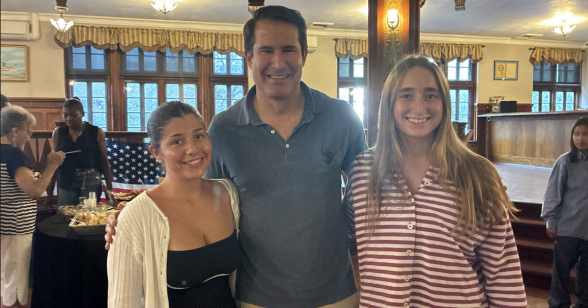
“Hello, my name is Mimi, and I’m volunteering with Seth Moulton’s campaign for the U.S. Senate. We’re out talking to voters today to get a sense of how they’re feeling for the upcoming Democratic primary between him and Ed Markey on Sept. 1.”
“Mimi. Hmm, okay. I’ve never heard that name before,” Howard, 63, a Democrat, responds from behind his door.
“Yeah, Seth,” Tom, 38, an Independent, says. “I like him, but he has a weird smile. I’m just not sure I can vote for him.”
“No, no, no, no, just no. NO SETH MOULTON! No,” Linda, 68, a Democrat, screams as she slams her door.
Three months ago, I would have never expected myself to get into those awkward conversations. In fact, when I applied for an internship with Seth Moulton’s campaign, I thought I’d be researching and writing – skills I felt confident in. On my first day of work, I was surprised to learn I would be canvassing 100 doors every weekend. I didn’t realize knocking on doors and talking to strangers was part of the job description.
As a natural introvert, I dreaded the days leading up to my first canvass. When I rang the doorbell on my first door, my stomach dropped and I hoped Karen, 50, a Democrat, wouldn’t be home. The sound of dogs barking and shuffling feet crushed that thought. When the door opened, I gave my opening speech and asked Karen her thoughts on the Democratic primary.
“There’s a Democratic primary this year? I haven’t even thought about it,” she responded.
I froze for a second, then I asked her what issues mattered to her and her family. Karen asked me what Seth would do for her disabled son who has been impacted by Trump’s healthcare cuts. After I told her about Seth’s healthcare policies, she promised she’d keep his name at the top of her mind. More important than a vote for Seth, though, this conversation, and others like it, have made me more attuned to the diversity of constituent perspectives.
Having now knocked on over 2,000 doors, I have learned that I can succeed without being an extrovert. I just need to be authentically curious — it’s a lot like journalism that way. When I meet undecided voters like Karen, I look for common ground and often find a more receptive ear. People who are opposed to Seth have helped me better understand their priorities and concerns.
For example, Rob, 45, an Independent, feared Seth’s policies were too progressive, and instead wanted a more moderate candidate.
“Boys shouldn’t play in girls’ sports; it’s just common sense,” he said to me from across the door in Norwood. “I mean, would you want to lose to a boy?”
I paused, unsure how to respond to this stranger who I knew would probably not give Seth their vote.
“Well, I do dance so it’s a bit different, but I understand where you’re coming from,” I said, choosing my words carefully.
Apparently, those words encouraged him to open up.
“I have three daughters myself. I don’t want them getting injured because they’re playing against boys. It’s just not right. It’s their future I’m worried about.”
Even though I didn’t agree with him entirely, I understood the sentiment behind his words. Though these conversations can be combative, I much prefer them to conversations where voters slam the door and don’t give me the time of day. I’ve emerged from these experiences with increased confidence, and, more importantly, with greater empathy toward the range of challenges so many Americans face.
Engaging with Seth’s campaign has allowed me to have a direct impact on my community and my country. Through my fellowship, I’ve learned that if you want to change the status quo, it’s imperative to put in the hard and uncomfortable work.