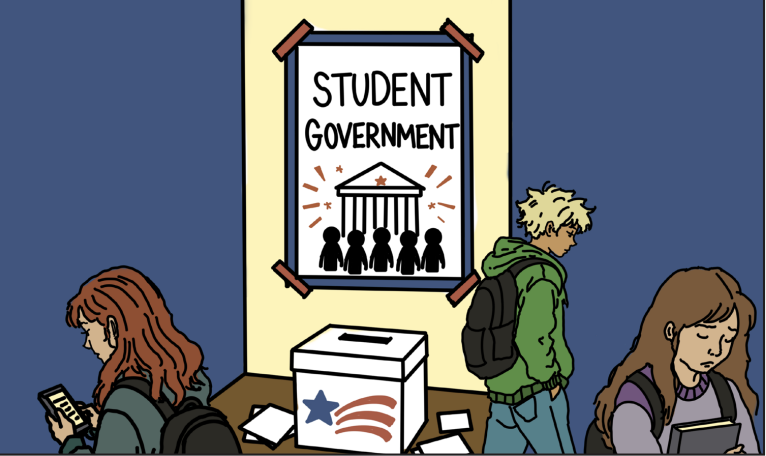
Geography Club hands out doughnuts to the winners of its weekly games and pays for its expenses out of pocket. Model United Nations (MUN) has a budget of roughly $8,000 to $9,000, yet still has to choose between conferences at Harvard and Yale. Both are Upper School (US) clubs. Both get funded differently by the school.
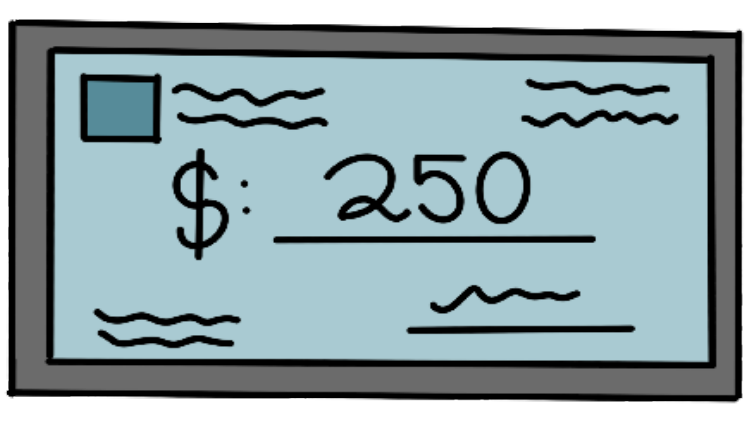
US Dean of Students Rory Morton ’81 said most of the 93 clubs registered this year, including Geography Club, can be reimbursed up to $250 each from the Dean of Students Office’s budget. The budget also pays for senior breakfasts, assembly chair rentals and grade deans’ requests. The exception is clubs that typically spend more than $250 a year, such as MUN, Best Buddies and nearly all school publications, including The Vanguard, which have budgets that don’t come from his office.
To be reimbursed, a club’s faculty advisor must submit forms and receipts to the Dean of Students Office, Geography Club President Malik Shadid ’28 said.
“The maximum amount of reimbursement you can get is only 250 bucks, and we spend way more than that on doughnuts in a year,” he said. “So there’s no point in having to go through all that legal trouble to only get 250 bucks back.”
The school agreed to cover the $150 Amazon gift card prize for the club’s geography bee this fall, but without weekly prizes and snacks, attendance might slip, he said.
“It’d be way more convenient if the school could cover that for us directly instead of us having to pay out of pocket and submit our receipts for reimbursement,” Malik said. “It’s annoying and costs a decent amount.”
Malik said he is still grateful for the reimbursement for the gift card and knows the school’s resources are limited.
“Although I appreciate all the help the school gives, I think a re-examination of how they distribute the funds to different clubs would help,” he said. “Maybe some way to score clubs on participation and need would be good.”
Mr. Morton said his entire club funding budget is currently about $8,000 to $9,000. MUN’s budget alone is comparable, its faculty advisor said.
Mr. Morton said the $250 figure dates back to long before he arrived at the US in 2000, when there were around 12 to 15 clubs.
“There used to be a $250 stipend that every club gets, but that’s actually not true anymore,” Mr. Morton said. “My budget is such that I couldn’t possibly support all the clubs that we have now if I were giving them $250 each. But also, some of our clubs don’t need $250.”
Giving 93 clubs $250 each would cost $23,250, more than double the current $8,000 to $9,000 budget. When Mr. Morton arrived at the US, his budget was around $15,000, and a sizable share of it went to clubs, he said.
“The money that didn’t get spent over the years, the school looks at it and says, ‘Well, we don’t really need to be including that’,” he said. “So it went elsewhere.”
Mr. Morton said he can approve spending over $250 if his office has money left late in the year, and he can’t recall refusing a student’s receipt in his 26 years in the US.
“A lot of times they’re thinking, ‘OK, it’s $8. I‘m not going to go through all that paperwork for $8,’” he said. “You can get reimbursed for that, but it‘s your choice if you choose not to submit the paperwork.”
Clubs not funded through the Dean’s office propose changes each spring, and a new club with costs like MUN’s has to wait a year while the school works out how to fund it and who will run it, he said.
Not every club with its own budget runs short. The Spectator, the US arts and literary magazine, gets a budget based on what it spent last year to print its issues, US English Teacher and Spectator advisor Wes Williams said.
“I have absolutely no idea how The Spectator’s budget compares with other clubs,” he said. “And I’m just fine with that.”
MUN has run short before. Last spring, the club ran out of money before a conference at the Noble and Greenough School, so its leaders asked for more and received it, MUN Co-President Matias Egan ’28 said.
“We have to pick between the Harvard and Yale conferences,” Matias said. “We’re trying to figure out ways to work around it, but it would be easier if we had more funding.”
Freshmen in particular often miss out on the Yale conference, and the club is trying to get more students involved than in past years, he said.
“If we had more money, we could take more kids to more things,” he said.
US Spanish Teacher Gabriela Gonzenbach, who took over as the faculty advisor for MUN this year, is booking hotel rooms for the 14 students and two chaperones who usually attend the Yale conference in January, she said.
“I don’t think MUN should be compared to those other clubs when it comes to funding,” she said. “It’s a different level.”
Profe Gonzenbach said she thinks the club’s budget comes through US Director Jessica Keimowitz’s office. It barely covers Yale and two local conferences, she said, so she plans to ask Ms. Keimowitz for enough to add the nearby Harvard conference.
“Maybe this will bring a conversation among adults,” she said. “What are we doing? Where are we supporting? Who is more important than who?”