“Any landing you walk away from is a successful one.” My grandpa used to tell me that long before I had ever landed anything. He served in the Army, and years ago he came close to earning his own private pilot license. He never quite finished, but his love for flying never left him. Somewhere along the way, it became mine, too.
I took my “discovery flight” – a first introductory flying lesson – at Chatham Airport when I was 14, before I was even allowed to drive a car or vote. I remember the runway markers zipping by faster and faster, the rattle of the wheels going silent as we lifted off and the steady buzz of the engine. Then came the turns — wide, sweeping banks where the horizon tilted on its side and the landscape just unfolded beneath me. It was a little terrifying, but it was the most alive I had ever felt. By the time we touched down, I knew I wanted to keep doing it.
Deciding to become a pilot is considerably easier than becoming one. Most people picture open skies, sunsets and aviator sunglasses. The reality is checklists, weather briefings, radiocalls and a vocabulary full of acronyms. Earning a private pilot license means passing written and practical exams on everything from aerodynamics and meteorology to federal regulations. Then there’s the work on the ground: preflight inspection, chart study and emergency procedures rehearsed until they become instinct. Flying, I learned, is all about preparation.
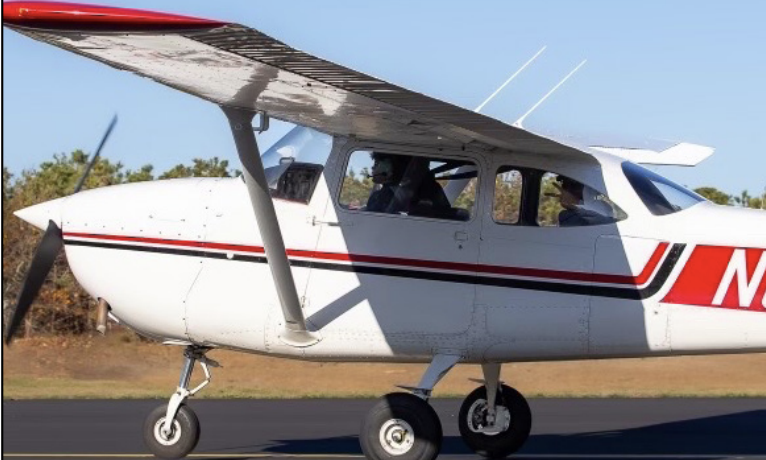
Through much of it, my grandpa was right there, sometimes literally, sitting in the back seat of the Cessna while I flew with my instructor.
I’d like to say my first landing was smooth and graceful. It most definitely was not. It was “firm”; in plain terms. Yet, as we rolled out, I was struck by one fact: I had just landed an airplane. However imperfect, the accomplishment was mine. When I shared the news with friends and family that evening, most were congratulatory. A few asked whether everyone was OK. By my grandpa’s standard, though, it was a complete success. We walked away.
In the years since, my landings have improved, but the bigger changes have been in me. Chatham is a windy place, and high winds have grounded more of my lessons than I can count. I’ve learned to check the forecast, study windsock straining sideways and make the call nobody wants to make: not today. As pilot-in-command, that decision belongs to no one else. At 14, a canceled flight felt like a wasted morning. Now I understand that knowing when not to fly is part of knowing how to fly.
Crosswinds taught me humility, too. Just when I was convinced I had crosswind landings figured out, I would come in for one that felt like my very first again: drifting, correcting and settling onto the runway with far less grace than I had planned. Each one reminded me that I hadn’t mastered anything yet. I was still learning, and I always will be.
So, what does flying actually feel like? People ask me this all the time, and I still don’t have a clear answer. It’s freedom, but not the carefree kind. It’s watching the ground shrink into a painting while also monitoring the oil pressure, listening to radio static, and planning the next turn. It’s feeling completely free and completely responsible at the same time. And, honestly, it’s still the same feeling I had on my discovery flight at 14.
My grandpa passed away last year. He won’t get to see where flying takes me, but he’s a big part of why I’m still doing it, and maybe part of why I’ve started to wonder about serving someday, the way he did.
To anyone chasing a goal that seems too far away: start anyway, and expect your first attempt to be slightly rough. Mine certainly was. I will never have a “perfect” landing. But I’ve walked away from every one of them, and by my grandpa’s standard, that makes every one a success.