
“We try to consider the student perspective … but we, as adults, have a limited viewpoint. We are not students. We do not live your day-to-day experience, and that is really why we need to have student voice on the EPC,” Dean of Teaching and Learning Michael Chapman said after serving on the Educational Policy Committee (EPC) for seven years.
The new Student Curriculum Council (SCC) allows four Upper School (US) students, one from each grade, to sit on the EPC, a group that makes recommendations on courses, academic requirements and other changes to the US’s academic program. Students will gather input from their grades and bring those perspectives to discussions with faculty and administrators.
In the past, the EPC collected student perspectives through surveys.
“We sent them out either before planning or creating something, or we’ve done something and then said, and now here’s a survey, tell us how this change is affecting you,” Mr. Chapman said.
Including students in the process allows the EPC to consider questions that surveys alone may not address, he said.
“This student curriculum council helps to bring the student voice not only into the questions of ‘how do we think this is going to impact folks?’ but also as we’re designing it, what are the considerations that we should be keeping in mind? Which I think allows us to, one, be much more proactive about that. And two, it gives students more voice in our academic policies, which affect all of you more so than they affect any of us as adults.”
US Assistant Director Katrina Fuller said the EPC oversees changes to the US academic program. By joining the committee, students can ensure decisions reflect their experiences.
“The committee oversees anything that’s printed in our Program Planning Guide,” Ms. Fuller said. “So anything in that document can’t be altered in a major way without going through the educational policy committee.”
The sophomores and seniors held elections during their class meetings on Oct. 21 and the juniors had their elections during CAB on Oct. 22. The freshman class will hold their election in a few weeks.
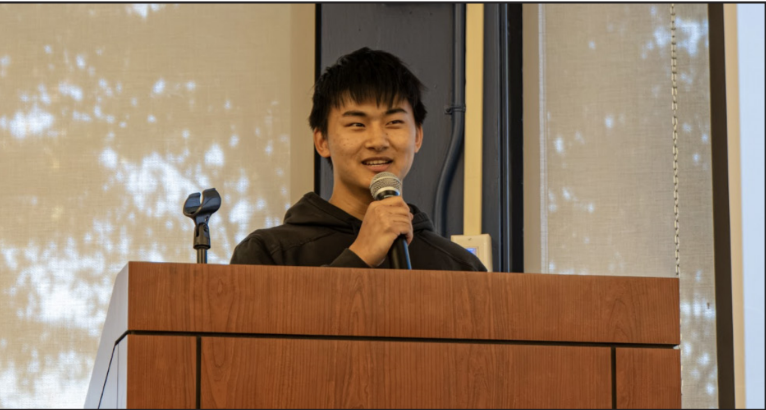
Eric Shao ’27, the SCC representative for the senior class, said his time spent at the US will be an asset to the committee.
“Seniors have a valuable perspective on BB&N’s curriculum,” he said. “We’ve experienced almost the entire US, from choosing courses as freshmen to navigating AP classes and graduation requirements as seniors. I believe having someone from our grade means we can use our experiences to directly inform conversations about academic programming.”
Eric said he is excited about contributing to conversations surrounding AI among other controversial topics.
“There are many ways AI can enhance our education, but I also recognize that the line between helping us learn and doing our work for us can be very thin … I want to help shift our approach from simply telling students what they can and cannot do toward encouraging meaningful conversations about the ethical implications of AI and how it can support learning without replacing independent thinking,” he said.
To learn more about his grade’s opinions, Eric wants to use a combination of short surveys and informal conversations with classmates.
“Surveys are very useful to understand broader trends, while individual conversations could help me understand why students feel a certain way,” he said.
The newly-elected representative for the sophomore class, Sophia Kluzak ’29, wants to focus on decreasing stress.
“I want to look at how AP exams, the profile and the history research paper are all in the same trimester for juniors, which puts a lot of stress on students,” she said. “I think that this council is just a great opportunity to put our voice into changing things that could really decrease stress among students.”
Arguing a point may be challenging at times, Sophia said.
“It might be a little bit awkward or intimidating to disagree with someone who might even be my own teacher, and someone who obviously is of a higher standing than me,” she said.
The role of a SCC representative is larger than her perspective, she said.
“What this position means to me is representing my grade and setting aside my own opinions. I think that is how I will determine whether I’ve been successful or not, because I want my whole grade to think of me as a trustworthy person and someone who will get the job done,” she said.
Valor McGrath ’28 said the perspectives of student representatives on the EPC should be supplemented by grade-wide surveys to ensure they accurately reflect their classmates’ views.
“Having a body to represent the grade is great, but having the body be the mind is not necessarily the answer. So if they really want this to work, then they’re going to have to figure out ways to make sure that the representative’s perspective is still truthful to the grade’s opinion.”
As elections draw to a close across grades, the new SCC representatives are set to have their first meeting with the EPC on Wednesday, Jan. 27, 2027. At this time, the sophomore, junior, and senior representatives will hold the three votes for the SCC, while the freshman grade representative will be present to learn about the proceedings. When the senior representative leaves to complete their senior spring project, the freshman representative will take over that vote.