The game Monopoly gets a lot of things right about life. Families arguing over money. Landlords charging ridiculous amounts of rent and someone inevitably flipping the board. However, Monopoly leaves out one important detail. In real life, buying a house with the money you have is only half the battle because the bank then spends the next 30 years reminding you where the money came from.
Those reminders come in the form of mortgage payments. A mortgage is a loan taken in order to buy property, which the bank has the right to confiscate if the buyer fails to pay back his debt. The buyer repays not only the debt itself, called principal, but also interest, i.e., the cost of using other people’s money. And right now, borrowing that money is expensive. According to Freddie Mac, the average rate on a 30-year fixed mortgage was 7.4% on October 15, compared with 6.27% a year earlier. “Fixed” means the interest rate stays the same over the loan’s term – great if you locked in a low rate, less exciting if you are shopping now.
To understand why rates are important, consider purchasing a house for $500,000, and putting down $100,000 on it, making the mortgage $400,000. With an interest rate of 3%, one will have to pay $1,686 every month on the principal plus interest for 30 years. However, at an interest rate of 7.4%, the monthly payment is estimated to be around $2,770, which translates into $13,000 extra every year on the same house without other costs. As Lawrence Yun, Chief Economist at the National Association of Realtors, put it, “Further increases in mortgage rates in recent weeks mean fewer buyers can qualify to purchase a home.”
But who determines these rates? Contrary to what one might hear from news headlines, it is not the Federal Reserve that determines your mortgage rates. The Fed indirectly sets the cost of borrowing through its interest rates, but the mortgage rates are also determined by the yields on long-term bonds, the expectation of inflation and the risk of lending money for the purchase of houses.
You would think that increased borrowing costs should cause home prices to fall. When fewer people are able to pay for an item, then its price should be reduced, shouldn’t it? That is often true, but there is a twist to housing. Imagine already owning a home with a 3% fixed mortgage. Moving might mean giving that up for a new loan at more than twice the rate. Suddenly, the toilet, which doesn’t flush well, seems manageable. Economists call this the “lock-in effect;” where owners stay put, fewer homes reach the market and buyers’ options shrink. Higher rates can weaken demand while also restricting supply.
And there is already a supply issue that has existed for a longer period in America. Building new houses requires land, labor, materials, capital and authorization. Zoning can control where housing is developed and the number of houses constructed. More expensive borrowing costs could also affect the ease of financing development. It will be favorable for buyers if borrowing costs are lower, yet they do not create additional supplies immediately.
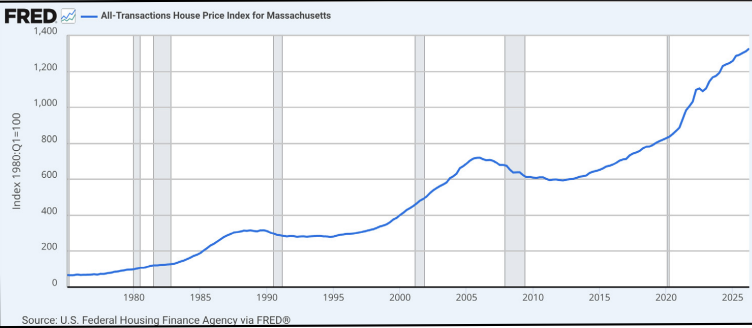
The data from the Fed shows the value of the housing market for U.S. households is estimated to amount to about $50 trillion by the second quarter of 2026. Housing plays an important role in accumulating wealth rather than merely providing a home. Buying a house can appear far off for Upper School students, but the impact could come sooner via rent and choosing your work location post-college. As fewer people can afford to buy homes, more continue renting, which can increase demand for apartments and push rents higher. That means even a fancy finance job in New York City could leave you taking a chunk out of your salary on a tiny apartment you share with two roommates.
None of this suggests every housing market is collapsing or every seller can demand whatever they want. Conditions can vary, and more inventory can give buyers much more negotiating power. But affordability is about the whole equation: prices, interest rates, incomes and available homes. So, no, skipping a few Felipe’s runs will not solve America’s housing problem, and the goal should not be making every home cheap overnight. It should be making owning a house possible without a lottery win or parents willing to fund the down payment.