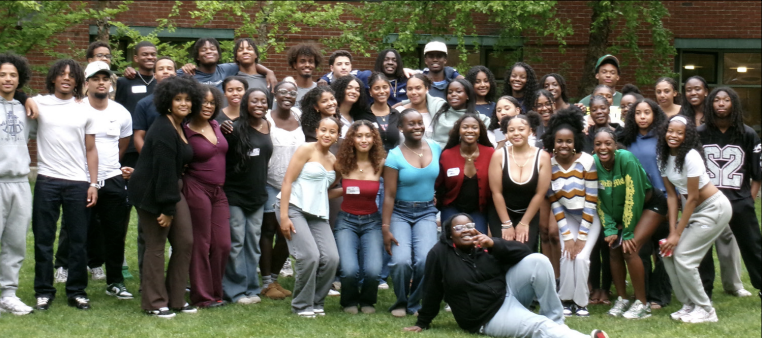
The Student DEIG Steering Committee (SDSC) was created six years ago after the Upper School (US) reopened following the COVID-19 lockdown. The school had just created its Diversity, Equity, Inclusion and Global Education (DEIG) office to combat the isolation many students were still feeling. US DEIG Practitioner Maria Graciela Alcid said the office hoped to hear first-hand from students about their experiences, and SDSC was established to include student voices in conversations surrounding DEIG.
During SDSC meetings, students learn about different affinity groups, exchange ideas about how their clubs can create belonging, participate in workshops on how to have difficult conversations and organize events.
Initially, SDSC was intended for leaders of affinity or alliance groups. However, in recent years, SDSC has strongly encouraged participation from leaders of all groups, including student clubs, athletic teams and publications.
“The invitation is open to all students interested in creating a community where every Upper School student feels connected, seen, valued and heard,” Ms. Alcid said. “Ultimately, the SDSC is tasked with the question ‘how do we cultivate a community of belonging in our school?’ Along with its other goals, the committee aims to provide students with opportunities to step up as leaders.
“I see SDSC as an important leadership laboratory where students acquire skills and partner on initiatives,” they said. “It sounds really lofty, but skills in facilitating really courageous, difficult conversations is something kids need, here and beyond BB&N. That’s what real leaders have to do.”
Co-president of the Amplifying Muslim Voices (AMV) affinity group Marwa Benyounes ’28 joined the committee her sophomore year.
“I joined SDSC when I became an affinity group leader because SDSC is a space for student leaders in DEIG spaces. I decided to join along with my AMV co-presidents because we wanted to be represented in the space and learn from others’ experiences. SDSC has helped me to develop skills in creating a safe space for people of different identities,” she said.
Marwa said SDSC teaches affinity group leaders how to address potential conflicts.
“Something we talk about a lot is differences of opinion. You can have a conversation with someone where you may not share the same viewpoint, but you can still be like, ‘here’s what I think. Here’s what you think,’ and work it out without turning it into an argument.”
Co-president of the Black Student Union (BSU) Princess Adeoye ’27 said SDSC meetings bring issues to light.
“A lot of the time when we come into the meetings we’re like, ‘wait, we need to have more conversations like this in our classrooms.’ There are things going on around the world that we aren’t talking about. Then we try to figure out, ‘How do we facilitate those conversations?’”she said.
Princess said SDSC taught her about the meaning of belonging.
“The biggest thing I’ve taken away from SDSC is how important it is to make sure everyone belongs. Belonging, one of our core values at this school, is about how much better a group feels when everyone feels they belong. Also, how good it makes you feel to know you put in that effort and someone will belong because of you. ”
Student coordinator of BSU Jasiri Cash ’28 said SDSC also helps teachers understand student perspectives by highlighting problems in the school, like microaggressions, a lack of sensitivity about learning challenges or a lack of understanding about cultural differences, and offering suggestions for solutions in case the problems arise again.
“We’re compiling a list of problems students have had on issues of diversity to possibly make a database of case studies for teachers so they know how to handle similar issues in the future,” she said. “The case studies would provide student feedback on how responses by teachers impacted them and how they would prefer teachers to act differently in the future.”