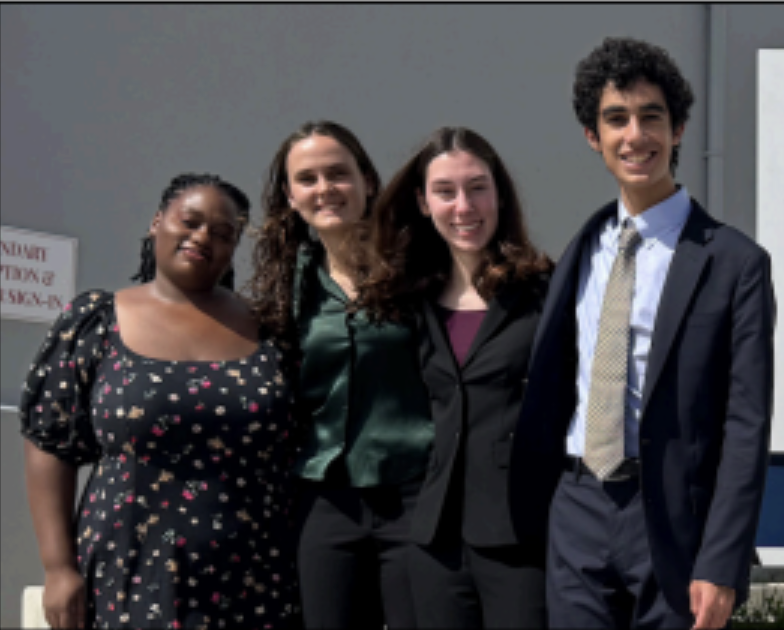
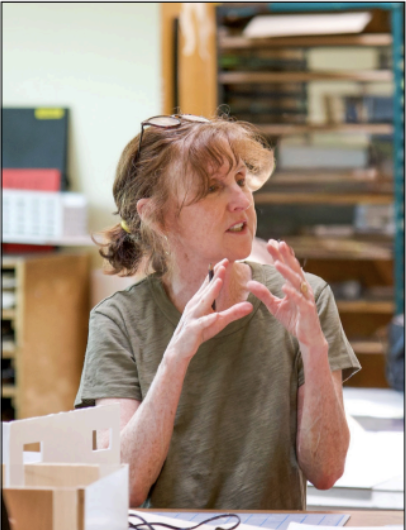
In June, juniors in Ms. Kornet’s English class wrote Modest Proposals — satirical pieces of writing that take a real issue within the school community and offer an intentionally exaggerated solution. While these ideas may be unrealistic, they offer a humorous way to consider the problems students encounter every day. The Vanguard is featuring one of these proposals, which addresses the school’s transportation system. Would you support the solution?
It is not uncommon to arrive at the Grove parking lot in the early morning and see the shuttle departing. You wait five minutes, then another five. As you wait, all you can think about is the meeting you must get to or that last-minute assignment you must finish. Or you are trying to squeeze onto the packed 3:25 p.m. shuttle after school, hoping you will not be late to practice. Or you have a doctor’s appointment in the middle of the day and you need to organize your schedule around bus availability just to make it.
In an era where food can get delivered to you in under 20 minutes, your package can be tracked to the exact street corner and you can call someone on the other side of the planet, BB&N still struggles to create a shuttle system that consistently works for students. I propose replacing the shuttle system from Grove Street to the Upper School with the BB&N Express Gondola lift. No buses. No drivers. No gas. No schedule. Just you and your classmates sitting briefly in a gondola that comes to and from school, continuously on time.
The Gondola Express would operate every school day from 5 a.m. to one hour after the last event. To keep operating costs low and reflect the school’s commitment to the environment, the system would be powered by solar panels mounted on the roof of the lift base. With 15 individual gondolas, each able to carry six people, the system would begin in the back of the Grove Street parking lot, eliminating only five parking spots. To avoid obstacles, including cars, trees and people, the base would begin 15 feet above ground level, easily accessible by stairs. From there, a direct route would carry students just over a mile to the school. The ride would end at a second lift base located on the patch of grass between the baseball field and turf. Each gondola would then return immediately to Grove to pick up the next students — something that does not happen now. Each pod would also contain heated, cushioned benches for maximum comfort, and some would be designated “silent” for students wanting to catch up on their excessive nightly workload. Others would contain a music box, allowing students to choose the soundtrack for their short ride. On the gondolas outside would be additional space for storage of athletic gear, musical instruments or even theater props.
According to National Bus Sales, most new shuttle buses cost between $130,000 and $160,000, while minivans cost between $100,000 and $140,000. Throw in bus driver salaries, rising gas prices and maintenance costs, and the current system is not cheap. A gondola transit system may seem too expensive upfront, but transformative ideas are rarely inexpensive. Surely a school capable of spending $40.5 million on a second athletic complex can invest to solve a problem students face every day. And you can’t put a price on punctuality. For the first time in school history, students might voluntarily arrive before class begins.
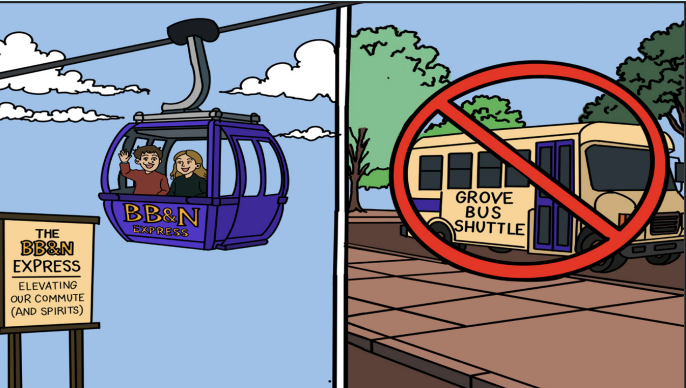
For those concerned about unauthorized access, students would pass through an advanced facial-recognition security system, that instantly verifies their school membership, before entering the lift. This would be an improvement over the current shuttle system where anyone can board without a second glance from the drivers. Beyond solving a daily transportation problem, the gondola would also become a distinctive part of campus. Imagine the look on visiting families’ faces as they pull into Grove, or even the school, and see a gondola gliding overhead. No other New England school has that.
Some have proposed a more straightforward solution: Just buy more buses and hire more drivers. Two key words: buy and hire. Why should the school continue to pour money into a system that has already proven unreliable? At a school that values innovation, I cannot support an approach so utterly lacking in vision. Others have suggested adding GPS trackers to the buses so students can know their exact locations. However, let’s be honest: Students would then track the bus’s movement while driving to Grove, an unsafe practice that wouldn’t lessen the likelihood of missing the shuttle anyway.
I welcome anyone who believes they have a better solution to step forward, provided their proposal is a serious reflection of how many students rely daily on school transportation. By the time the BB&N Express Gondola is up and running, I will have graduated, so I will not reap the benefits. Until then, the gondola seems the most logical, reliable and exciting option on the table. The technology exists, the sunlight is free and the sky is the limit.