Christopher Nolan brought Homer’s most famous epic to the big screen this summer. “The Odyssey” made history as the first feature film to be shot entirely with IMAX cameras and quickly became one of the most anticipated films of the year. So the question is: Did “The Odyssey” live up to its reputation as one of the greatest works of literature of all time?
The short answer is mostly yes, but before diving into the review, most viewers have the same question: How important is it to see the film in IMAX 70 mm, as Nolan intended? I personally saw the film in IMAX 70 mm and really enjoyed it, specifically because of the sheer size of the screen, which matched its epic scale. Also, the 70 mm provides a sharper image and film grain, which is pleasing to the eye. If the film is viewed on a smaller scale, the image is cut, leaving out key details.
Now on to the film itself. There is no question that this film’s scale and visuals are amazing. Christopher Nolan and his cinematographer Hoyte van Hoytema were able to bring the massive time span to life. My favorite visual choice was how they were able to create the underworld and the most intimidating version of Agamemnon ever to appear on screen. The depiction of the Battle of Troy was very impressive, specifically the practical and massive Trojan Horse.
However, the film did not show the true bloodshed of war. This may have been a creative choice to make the viewer empathizes with Odysseus more, but later in the film, this issue recurs. In the final battle, when Odysseus reveals himself and kills the suitors, there is very minimal blood. By comparison, in Homer’s epic poem, the blood and killings are brutal, a punishment fit for their betrayal, making the film’s depiction seem like watered-down vengeance.
The pacing of the first third of the movie also feels rushed. This is most likely due to the sheer size of the epic and how long a feature film can be. The rest of the movie is well paced and has great visuals and effects, including the eerie cyclops and the transformation of men into pigs.
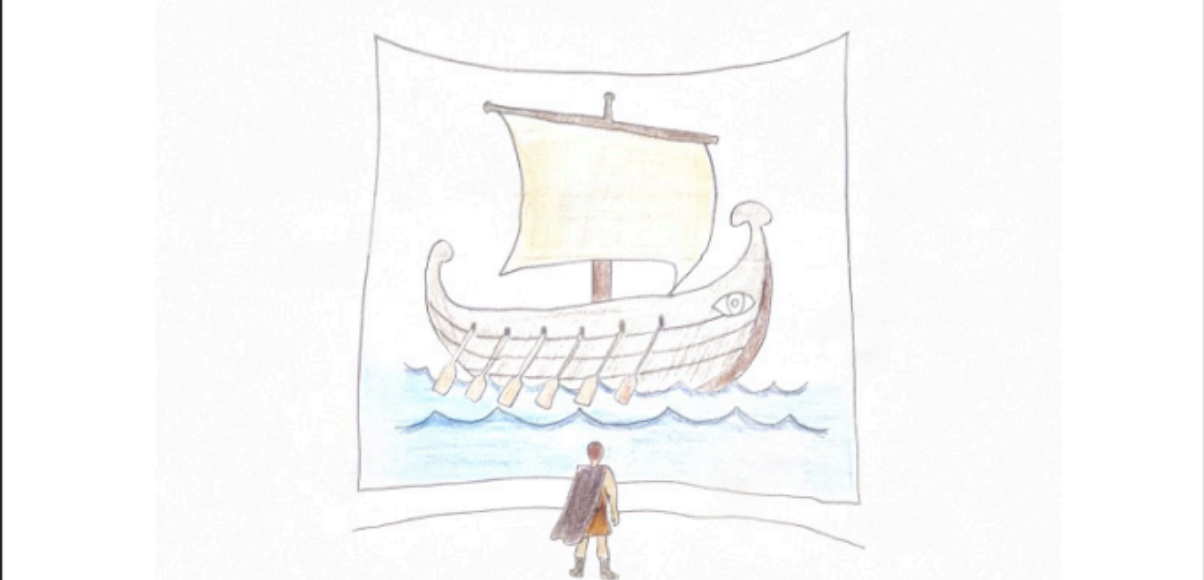
Many readers of “The Odyssey” will notice that some of their favorite parts were cut or reworked in order to fit the format of the film. For example, the symbolism of Odysseus’ marriage bed is instead conveyed through his wooden throne, whose carved design similarly represents his deep connection to his home and family. Another omission is Odysseus’ interactions with the Phaeacians, including one of my favorite scenes, in which he throws a large, heavy discus after he is taunted. The film also missed the important interaction between Polyphemus and Odysseus, where Odysseus calls himself “no man” and then reveals his name out of pride, as he wanted the world to know who had defeated Polyphemus. In the film, Odysseus escapes, never stating his name. Instead, he leaves and shoots an arrow into Polyphemus’ eye out of grief. By changing Odysseus’ motivation for his final moments with Polyphemus, Nolan reshapes him from a prideful, cunning man into one who truly cares for his men, making him easier to empathize with.
The cast gives very convincing performances, with the standouts being Matt Damon and John Leguizamo. They both seem realistic, and Matt Damon is able to give quiet emotional performances while also feeling weathered. Tom Holland gives a decent performance, although he did not convincingly show Telemachus’ growth, as the final battle focused more on Odysseus rather than the two fighting side by side. Nolan also adds a layer to the story by emphasizing Xenia, Zeus’ sacred law (which is basically the golden rule), making it more accessible to modern viewers. Nolan’s decision to set “The Odyssey” during the collapse of the Bronze Age also adds a new layer to the story. Odysseus’ use of the Trojan Horse broke the trust and Zeus’ rule that society was built on. This adds emotion to Odysseus’ reflection.
While some of Homer’s memorable moments are missing, Nolan is able to capture the story’s emotional core. Anyone who loves “The Odyssey,” film and spectacles should definitely see it in IMAX.