Often, people try to turn back time by replacing the present with pieces of older decades. We hear our parents say “back in the 80’s…” which, in our minds, brings up images of “The Breakfast Club,” puffy hair and neon fashion. Today, we are seeing a similar phenomenon: a 2016 rewind! Famous figures and artists from a decade ago are reclaiming pop culture. After Justin Bieber’s performance at Coachella, when his voice shifted halfway through, it felt like audiences were transported right back to the 2016 era of music. In the weeks that followed, he surged back into popularity after years in the dark.
Kylie Jenner has had a similar grasp on her fans. She recently rebranded her makeup line to reflect her 2016 King Kylie era, leaning into bold, dramatic looks and moving away from the minimalism that defined her 2020 style.
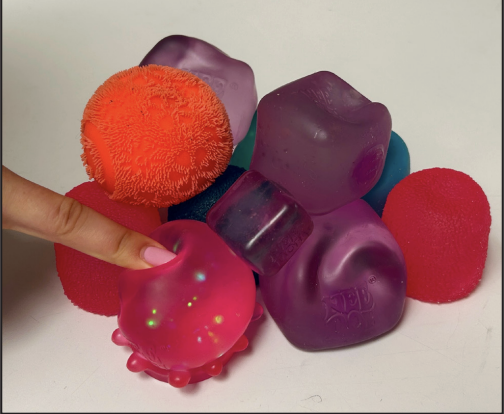
Even students in school have brought back the 2016 fidget craze. Almost every student at the school has a NeeDoh or squishy to help them focus in class — so much so that people have made promproposals with “We NeeDoh go to prom together.” Even stores cannot keep up with the demand: Within five minutes of restocking NeeDohs at Learning Express in Newton, the shelves are already empty again.
Due to this pop-culture swing, parties have started to lean into 2016 throwbacks, complete with chokers and mesh tops. Even beyond fashion and entertainment, the trend feels broader in scope. Look at our political system, Donald Trump is back in office.
2016 seems to be all around us. But why do we feel the need to recycle the past? Is it nostalgia? Or is it because we are endlessly looking for something beyond the present?
The problem is that we tend to romanticize these past eras, remembering only the highlights while ignoring the flaws. While joining a themed party or buying a NeeDoh is harmless, it’s worth asking how much time we want to spend looking backward. Instead, let’s focus on shaping 2026 into something to remember.