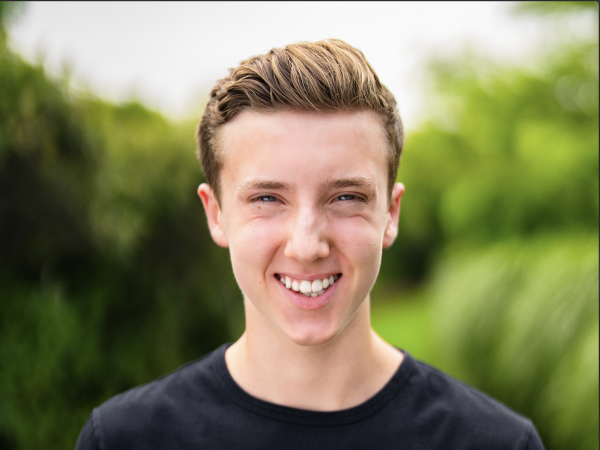
“I was scrambling. We had five minutes before we had to go to the theater. I’m trying to write my speech. I’m trying to change. Everybody’s all stressed out. I haven’t had a chance to practice or run through my speech,” Dylan Cooper Ewing ’28 said, describing the minutes leading up to this year’s All-Star Debate.
The All-Star Debate is an annual event at the Upper School where the best debaters from each sophomore English class form two teams and debate a resolution before their grade. In the past, students were allowed two to three weeks to prepare; however, this April, the format was changed, and each team received just six hours instead.
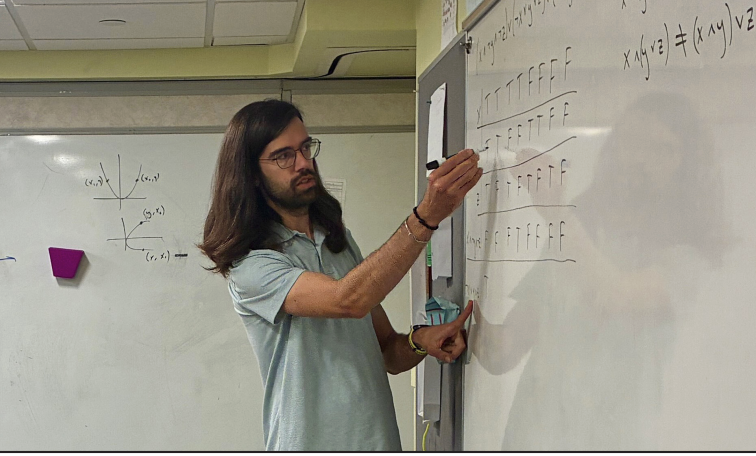
As soon as the school day started, the All-Star Debaters (commonly known as the All-Stars) began preparing for the debate, which was scheduled for the afternoon.
“We got to school and Ms. Duddy briefed us on what we were going to do,” Oliver Song ’28 said. “She gave us our teams and our topics, and then we split off into two different rooms. She had curated a pack of 14 resources that we would pull all of our information from.”
In addition to the shortened preparation time, All-Stars were limited to a selection of articles and a book compiled by librarians and English teachers rather than conducting independent internet research. Oliver Song ’28 said the restrictions made it harder to develop the arguments his team wanted to pursue.
“I feel like the teachers had an idea that they wanted the debate to focus on one main argument, but neither of the teams really wanted to talk about that,” he said. “We didn’t really find most of the sources applicable to what we wanted to say.”
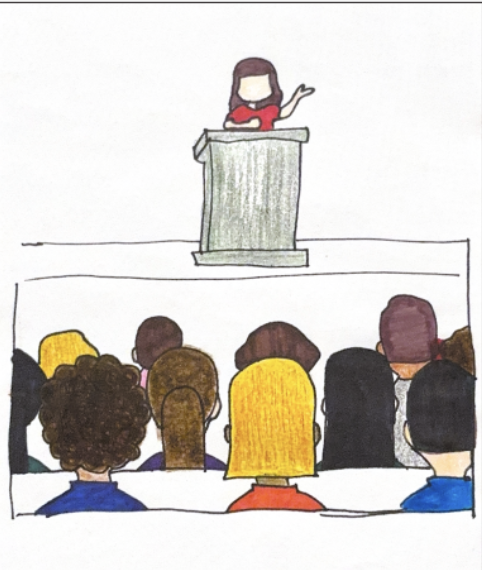
Because Oliver typically relies on extensive preparation before debates, he said the shortened timeline was difficult to navigate.
“I didn’t like the idea of [being] sequestered for a day because my strength in debate is my preparation,” Oliver said. “I’m not quite as good at the actual talking part, so I didn’t love just having one day to prepare.”
While Oliver struggled with the condensed preparation, Jonathan Harlev ’28 felt more comfortable working under time pressure because of his Speech and Debate experience.
“We get five minutes to prepare in our shortened practices, and we get ten minutes at tournaments,” he said. “So it’s not like I’m working with less time than I’m used to. It was definitely a confidence boost to know that I’ve prepared like this and maybe half of the other side hasn’t.”
According to English Department Head Ariel Duddy, one of the main reasons for changing the debate format was to relieve the stress for the All-Stars of having to prepare on their own time. Jonathan agreed that the new sequestered-for-a-day plan was preferable.
“If I had to prepare over a whole week, that would honestly detract from my learning more than missing that one day,” he said.
Justin Hildebrandt ’27, who competed in last year’s debate under the old format, said balancing preparation with regular schoolwork was overwhelming.
“It was a bit stressful to have the All-Star Debate looming and then having to prepare,” he said. “It made some of the cases kind of underbaked just because it’s always going to be extra work.”
In prior years, Ms. Duddy recognized that the All-Star Debate, which was meant to be a reward for the most skilled sophomore debaters, could instead create more of a burden, leading to less well-prepared speeches.
“In the past, a handful of All-Stars have opted out, which seems like such a shame because it’s meant to be a positive experience for everybody,” Ms. Duddy said. “I think we felt uncomfortable with this idea that we’re putting students in a situation in which they might feel underprepared to perform in front of the entire sophomore class in a pretty high-pressure environment.”
This year, to counterbalance the reduced time All-Stars were given, other aspects of the debate were also changed.
“We tried to mitigate that feeling of ‘I can’t prepare as well as I’d like to’ by allowing them to bring up paper to the podium,” Ms. Duddy said. “As opposed to feeling like they have to read the research, come up with argumentation, figure out their speech, figure out their delivery, memorize it all and now perform it, it was ‘yes’ to all the beginning stages, but no memorization.”
Based on this year’s results, next year’s All-Star Debate will likely follow a very similar format.
“The debate itself, in combination with the feedback we’ve gotten from All-Stars, suggests that we should stick with it,” Ms. Duddy said. “I think by all accounts, it was a success.”