“We were talking about the possibility that we would have that seat be empty,” Junior Student Council (StuCo) Representative Jone Abadie ’28 said about last spring’s StuCo election.
The sophomore class had one student representative spot remain vacant. Eventually, a second election was held, and the position was filled. The junior class faces a similar problem — their vice president seat remains empty.
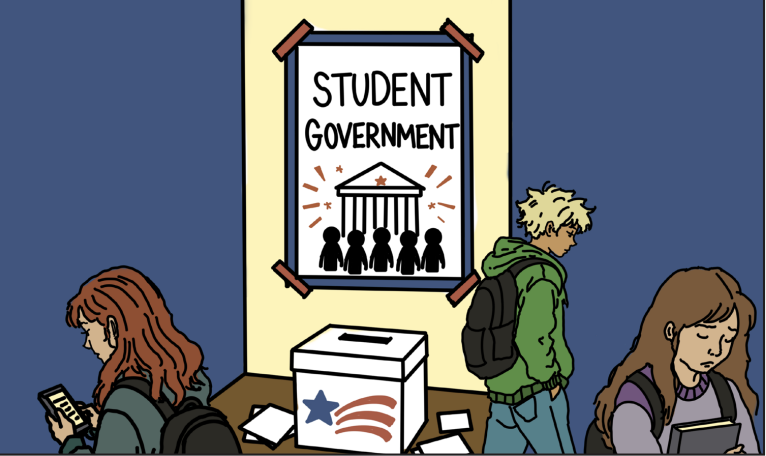
The junior class has seen an overall decline in people running for StuCo. In 2023, 16 candidates ran for five positions compared to eight in 2024. This echoes a larger trend at both grade-wide and school-wide levels, with three candidates running for two student body co-president spots.
Jone said an unfilled position would mean a bigger workload for the existing members.
“More work would be put on the rest of the StuCo because in StuCo we write proposals and we come up with ideas, and having one less person would make it more work for the other people,” she said. “A lot of us were relieved when we got that final person.”
Jone expected more students to run.
“It is surprising, but at the same time, I understand where people are coming from because it’s a big thing to put yourself in front of others and give a speech about what you want to do for the grade, and it’s also a lot of responsibility,” she said.
Jone encourages Upper School (US) students to run.
“As we’ve seen this year, there are a lot of people who didn’t run initially who, in the second election, chose to run and had some really great speeches and some really great ideas. It’s really great to put in a little bit of your time to help the people around you and it’s really rewarding work,” she said.
Dylan Cooper-Ewing ’28 said she considered running.
“I ultimately chose not to because there are a lot of other things that I want to be involved with at the school and I didn’t want to be doing too much,” she said. “I think StuCo in general is an appealing thing, and I’m glad we have it. I’m glad that people are on it, but personally I would rather be committed to other student organizations.”
Dylan said the small number of positions compared to other clubs at the school may be a factor.
“A lot of people don’t even consider it just because so few people are able to be on StuCo,” she said. “Because the majority of people won’t be in the student government, then people just kind of get invested in other things early on and put their priorities in other places. It’s still appealing to people, but maybe because it’s a smaller option compared to joining a club or some other community involvement it’s less obvious a choice.”
Former StuCo member and Student Body Co-President Darius Sinha ’24 said there was no shortage of candidates when he went to the US.
“When I was there, there would be a lot of people running, maybe not a super large amount, but it would certainly be a lot of candidates,” he said. “I was motivated to run just because I really wanted to get involved in student government because I felt like I could make a difference in the lives of people. I felt like I understood what people were going through, what their needs were, and I wanted to be able to engage with them and the administration to get that done.”
Darius said he was sad to learn not many people are running.
“It’s a shame though because it’s such a fun activity, and I think for a lot of people who are going to be future leaders in society it’s a great way to start learning those skills early,” he said.
Darius advises students to seriously consider StuCo as an extracurricular.
“There are so many clubs, so many classes, so many whatevers that you can get involved in,” Darius said. “I would encourage people to not overlook StuCo as one of them. If that’s not for you, that’s not for you, and that’s fine. Really think of it as an actual option, and even if it is a more academic extracurricular, it’s certainly a lot of fun, and you get to do a lot in it as well.”