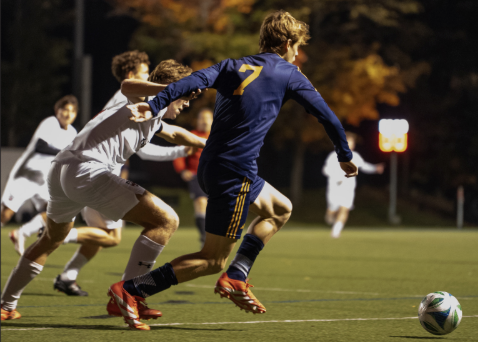
Last fall, after 90 minutes of JV soccer practice, one student at the Upper School (US), who wishes to remain anonymous to protect their privacy, headed straight to a three-hour club swim practice. By the time they ate dinner and showered, it was 11 p.m., and they still had over three hours of homework to complete. According to the student, this is a shared reality for many student-athletes who play any sport at a high level.
While the school’s sports requirement aims to build community and promote physical activity, some students say the policy creates physical strain and academic stress. They also argue it causes scheduling conflicts given the increasingly demanding commitments students face beyond on-campus activities.
“When I would do soccer, I would leave early every single day. I could never go to any of the games,” the athlete said. “It doesn’t help my academics and it doesn’t help my sports out of school.”
Along with balancing their overlapping commitments, the student-athlete said the sports requirement also pushed them to their physical limit.
“It creates a lot of physical strain. I was injured because in soccer I was using different muscles, and then I went right to swim, so there were definitely some repercussions down the line that were negative in that aspect.”
As for making friends and being a part of the community, the student-athlete did not feel a negative impact.
“The BB&N community is very strong, so I’ve never had an issue. There are so many opportunities to make friends without sports,” they said.
The BB&N All-School and Family Handbook outlines the requirements for each grade level, noting the difference between an interscholastic and a non-interscholastic sport. Non-interscholastic sports include Health and Fitness, Strength and Conditioning, Rock Climbing and Sculling. Managing a varsity team counts as an interscholastic sport. Students may also fulfill one season of the requirement through non-athletic afternoon programs, including activities like stage crew and robotics team.
Students who play a sport not offered by the school can apply for a waiver for that sport — but only for one season.
Maia Deming ’27, a swimmer who trains 15 hours each week, fulfilled her requirement with stage crew.
“I’m not personally interested in it,” Maia said. “I go as much as I can, but I have to leave early because I have to get to swim practice, and so I’m really just doing it for the sports requirement. If I did a sport from school, I wouldn’t be able to get to practice on time, which is something my coach really values.”
According to US Athletic Director Jaye Locke, the sports requirement is designed to reflect the school’s core values.
“We believe in the benefits of being a part of a team sport and what you can learn,” she said. “Keeping people active, learning and stretching themselves in new ways.”
While the school does not offer swimming, it does offer several less common school sports including fencing and squash, Coach Locke said. She believes not every sport has to be played at the highest level to be of value.
“It encourages somebody to do something that they never thought they’d do, and then they get hooked, and it’s meaningful and fun. People are still playing JV hockey as seniors and they’re having a blast.”
The sports requirement also generally allows for the fielding of JV teams, Coach Locke said. However, this spring there weren’t enough players to field a JV baseball team.
“Part of BB&N is being a part of our programs and engaging in it, which allows us to run them, which allows everybody else to have a meaningful experience too,” she said. “It can be really hard right now in the spring season. We don’t have JV numbers. I’m bummed that we don’t have a JV baseball team for the first time in a long time.”
The Independent School League (ISL) does not give any guidelines for the sports requirement in the bylaws aside from the waiver policy, which states, “Multi-season, single sport: Athletes may not receive credit for participating in a sport offered by the school for more than one season in an academic year.” The school’s Athletics Department plans to reevaluate the sports requirement.
ISL schools can have different athletic requirements. The Athletic Director of the Noble and Greenough School Alex Gallagher explained how Nobles approaches the athletic requirement.
“At Nobles we don’t have a sports requirement, we have physical requirements … you can fulfill it not by playing a sport, but we do think that part of our responsibility as a school is to ensure that kids get some physical activity.”
The current afternoon programming requirement at Nobles states that students in ninth and 10th grade have to do three seasons of afternoon programming, and two of those seasons have to be physical in nature. Students in 11th and 12th grade have to do two seasons of afternoon programming and one of those seasons needs to be physical. They are permitted to take one season off as an exempt season.
Nobles has a similar waiver system for sports the school doesn’t offer, with the addition of a one-day waiver.
“We allow kids to waiver for one season for a sport the school does not offer, and if they play for a JV team, we allow them to request a one-day exemption from our afternoon program,” Mr. Gallagher said. “We want them to be able to do what matters to them. It’s because we really believe in what we’re doing here, but we also understand the huge commitments the kids are facing outside of school.”
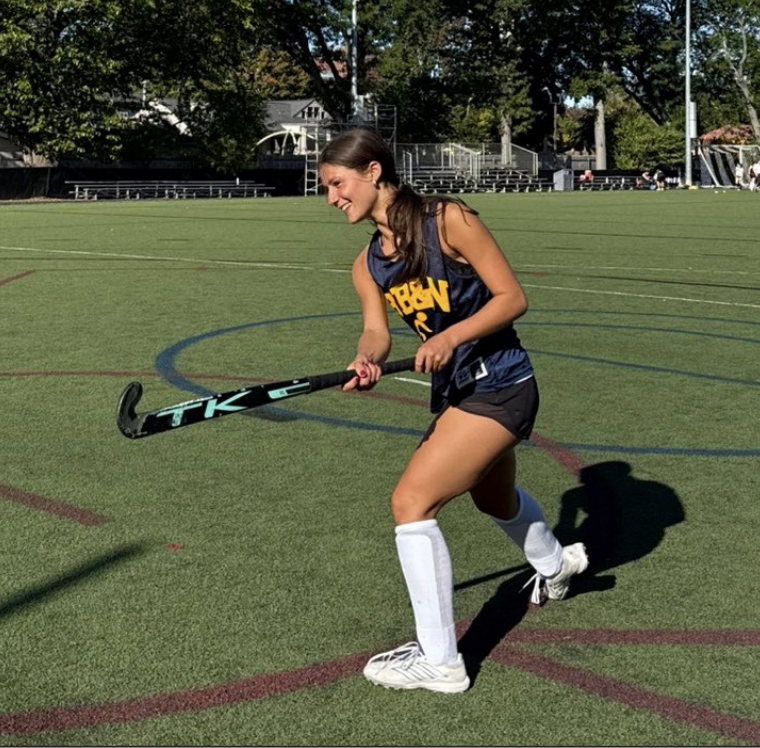
The sports requirement provides more opportunities for connections between grades, Girls’ Varsity Lacrosse and Field Hockey player Toni Lally ’28 said.
“If nobody had to do a sport, a lot of people would take more than one season off, and since sports is a huge part of the culture here, it is a really great way to interact with a lot of the upperclassmen and people who you don’t normally see as much.”