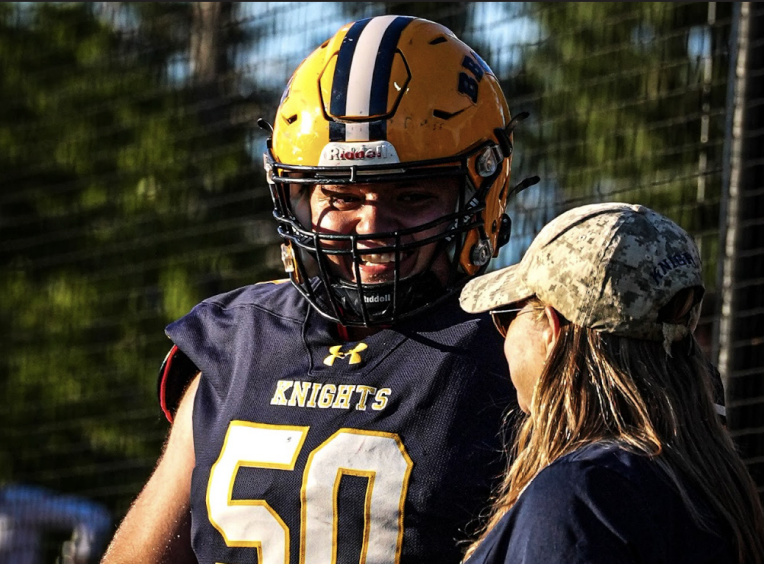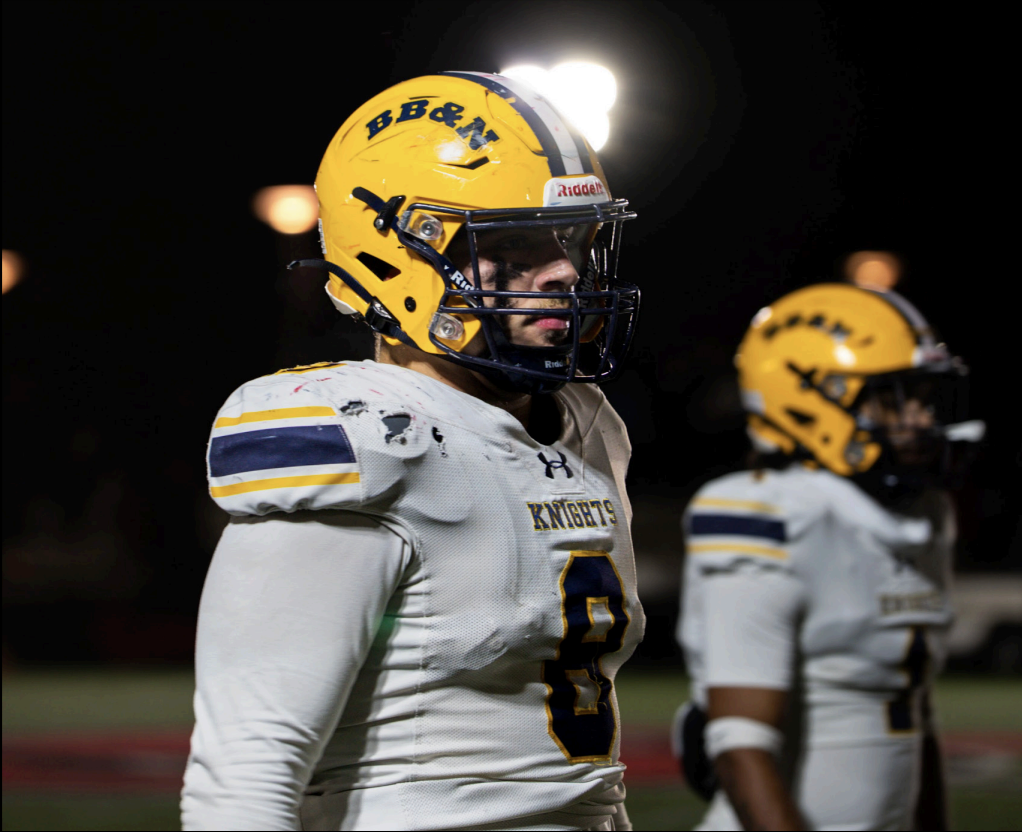
By his sophomore year, Varsity Football (VF) player Owen DeSalvo ’28 had 13 offers from colleges across the country. However, those offers do not carry the same weight as in other sports.
“Football is definitely different from a lot of sports in the amount of kids that do get offered. But, even though they hand out a lot of offers, once it gets to the point where I’ll be choosing where to go, that’s when you figure out which schools are showing real, genuine interest,” Owen said.
As of 2025, the NCAA has allowed the maximum number of scholarships to match the number of roster spots for any given sports team at the Division I level. Currently, there are 105 scholarships for Division I football teams, while Division I men’s hockey teams cap scholarships at 24 and Division I men’s soccer at 28. More roster spots mean more offers, more social media strategy and more pressure to commit early. That flood of interest cuts both ways, forcing players to sort genuine interest from noise in a way other athletes rarely have to.
“There’s things called committable offers, which means if you have an offer that’s committable, that’s real interest, they want you on their team, and you can commit whenever you want,” Owen said. “However, if you don’t have a committable offer, that basically means your offer really is just verbal, and it doesn’t really mean anything until you’re at a point where you’re building these real relationships and seeing if that interest will actually turn into a committable offer, and you can actually go to that school.”
VF player Liam Cunningham ’27, a Colby College Division III football commit, said football coaches sending so many offers can cause a rushed timeline.
“Colleges do send out more offers because they do have more spots,” he said. “Looking at the Ivy football teams, they take around 25 people a year while Ivy basketball teams take around seven. However, if you wait too long to commit to a school, those spots go away because they were offered to so many people. That’s why a lot of people try to commit as early as possible with football.”
Because offers are verbal and only represent potential interest, coaches use social media accounts more prominently to guide their decisions, VF Coach Mike Willey said.
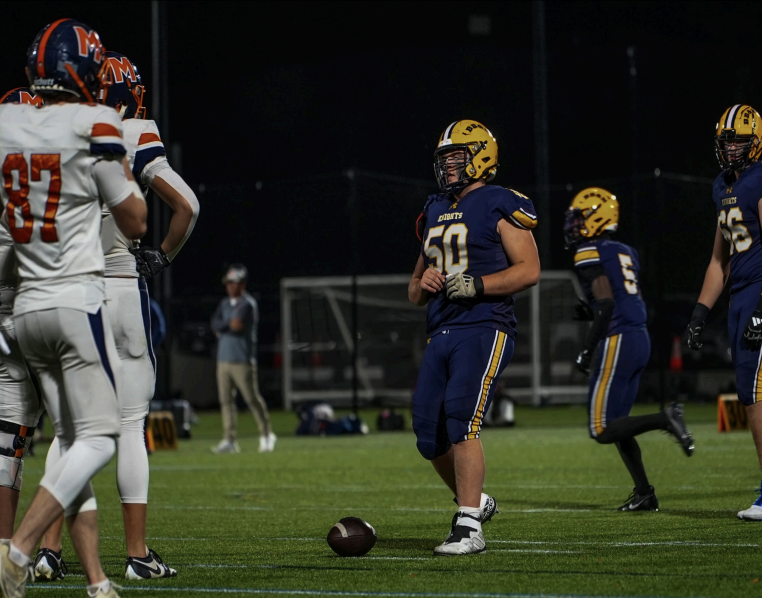
“A lot of recruiting work is done through the player making their own profile on X and having good Hudl tapes or highlight reels,” Coach Willey said. “That’s really your resume. This allows college coaches to go see how the kid plays, and then they can also communicate with the kid through that same app. It’s all in one place for the college coach, and they end up using it a lot, meaning it generates more player-coach communication.”
VF player Dante Snoonian ’27, a Yale University football commit, said because coaches send large batches of offers, social media can be used strategically.
“Posting offers lets other coaches know who else is interested in you, and it can help give other coaches a little fear of missing out,” he said. “It makes them more anxious or more wanting to pull the trigger on an offer, especially because most teams only have so many spots, if they see you’re getting a bunch of offers from all these other schools that they compete directly against.”
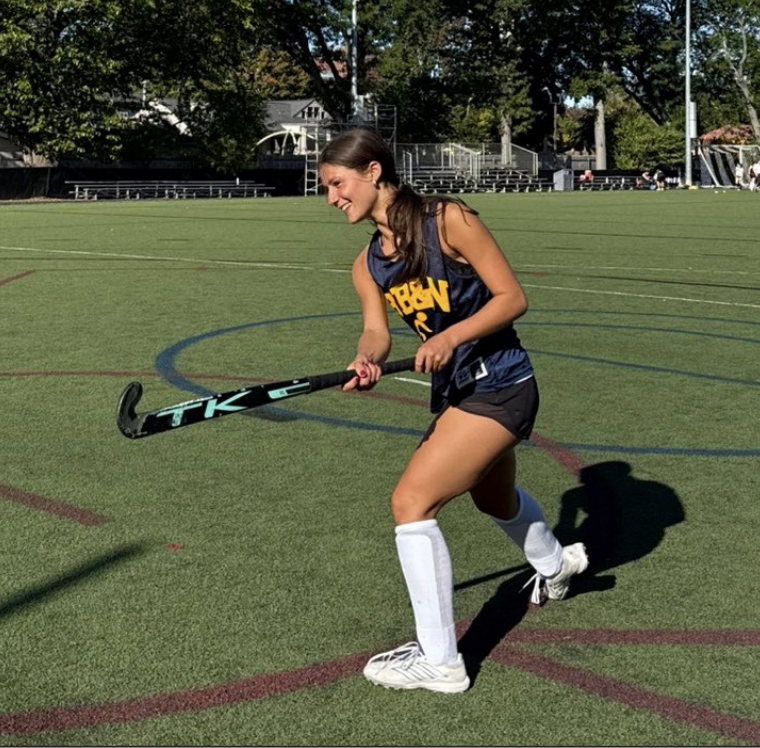
Teagan Kilpatrick ’25, a Colby College field hockey recruit, described how field hockey recruitment follows a later timeline.
“On July 1, and a little bit leading up to that, I locked in on the schools I was most interested in and stayed in touch to see if I was still on their list,” she said. “It is not a thing to really have offers, it is more just continuous communication and emails.”
Large numbers of offers and early verbal offers did not happen in field hockey, Teagan said.
“I just got a call from my current coach, with a verbal offer, and then I did the early decision application,” she said.
As for social media presence, Teagan said it did not play a role in her process.
“I never did any kind of social media presence,” she said. “I don’t hear many players, at least for field hockey, getting offers or connecting with coaches on Twitter or Instagram. For me, I just communicated over email.”
While recruiting varies by sport, VF’s process is a common path for many athletes at the US. In the VF Class of 2026, 11 of the 13 seniors were committed to Division I and Division III schools.