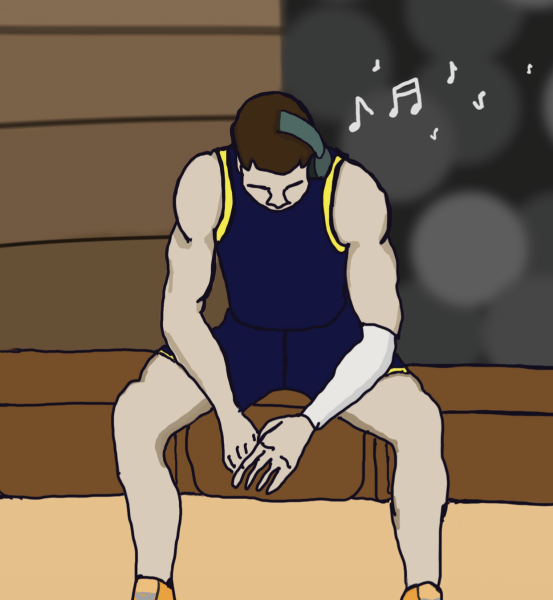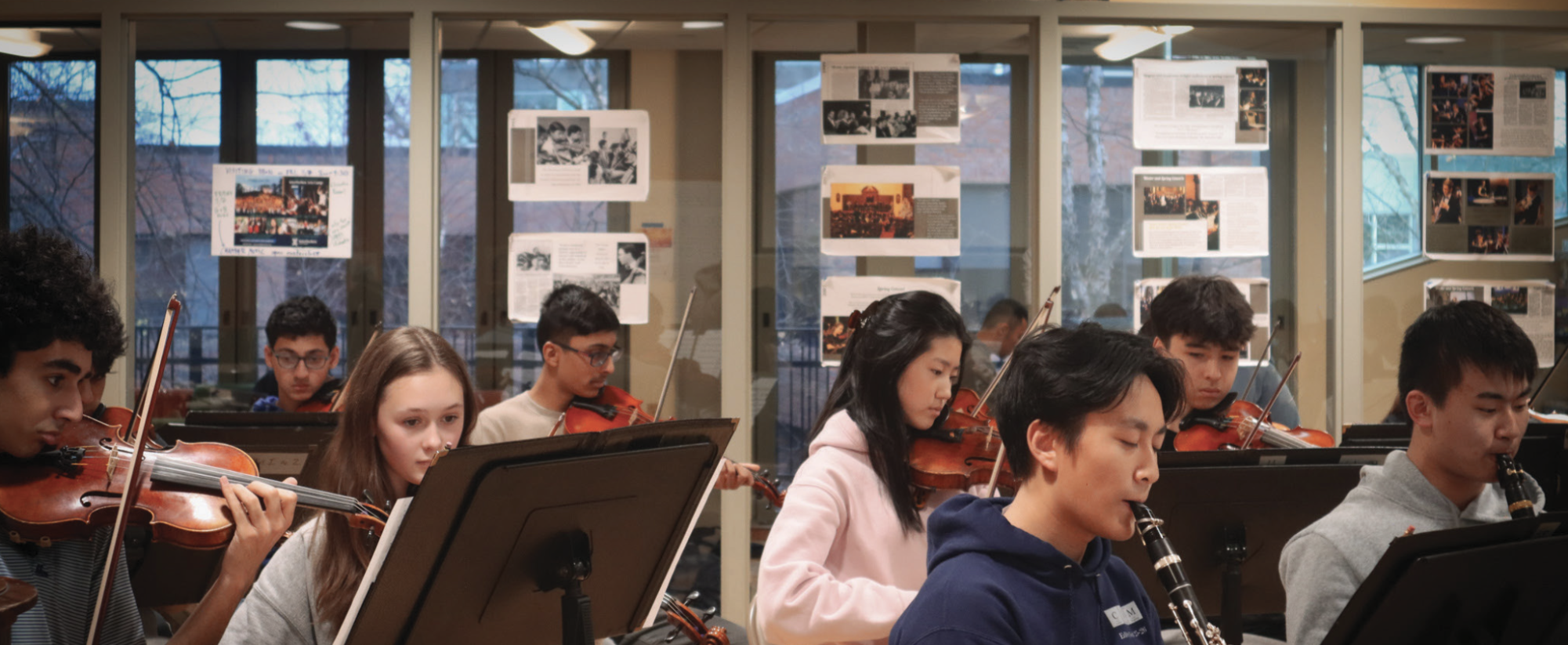
For many Upper School (US) students, music is more than a class or extracurricular: it’s a tool for managing stress and processing their emotions. From solitary listening to collaborative performances, students experience music in distinct ways that help them regulate their emotions.
According to the NIH, while listening to music is linked to reduced stress and anxiety, actively playing an instrument is associated with greater health benefits, including improved cognitive health, social connections and self-esteem.
“While listening can be an active or passive experience, playing music is inherently active,” US Orchestra Director Elliot Cless ’02 said.
“It becomes a dialogue between your own emotions and the song or composition’s expression. My teaching strives to help students tap into that dialogue and build their capacity to feel the music. Tying in their own stories is one of the great joys and responsibilities of teaching music.”
Dr. Cless said experienced musicians can enter a flow state — an optimal state of attention.
“Flow is also what athletes describe when the game slows down for them. Musicians in a flow state get a bonus cognitively because their brains latch on to the rhythmic structure of the music and help them stay in the groove.”
Salar Sekhavat ’26 plays the violin in the US Orchestra.
“Music really energizes me and bolsters my creativity, and it’s an outlet that’s always present in my daily life,” he said. “Making music asks something of you, and that is what gets you invested in the process and what makes it come alive.”
Salar said the impact of playing music differs from listening to it.
“When I’m playing music, I’m able to completely pour whatever emotions I’m feeling into the moment in combination with the piece’s own emotions and really sing out. It feels like I’m able to speak my mind. When I’m listening to music, I don’t feel as in control of my emotions as when I’m playing it.”
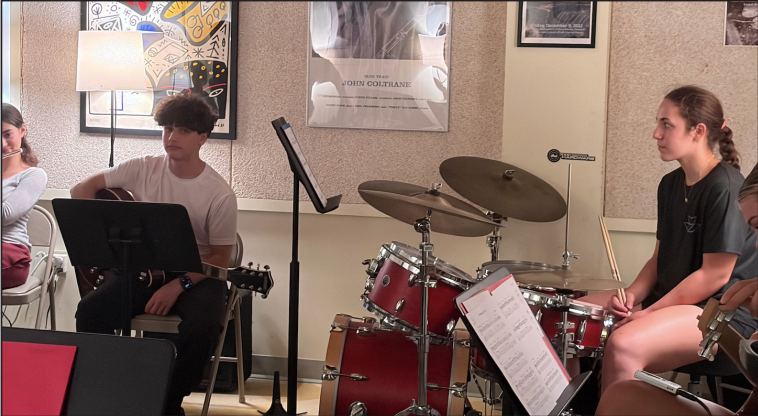
Gideon Coleman ’29 plays the saxophone for the freshman jazz ensemble.
“I feel more in control of my emotions when I’m actively playing music, and I’m conscious of what I’m doing and have to be in control of my emotions to play well,” he said.
Gideon said music has its limits as a coping tool.
“Music is almost always my solution emotionally to help me through problems, but sometimes, it doesn’t help as much, and I just need to sit in my own thoughts without listening to anything.”
Drummer Matthias Paulson ’26 agreed.
“Music is one of the most consistent tools I have for resetting mentally,” he said. “I feel more in control of my emotions when I’m playing. Drumming gives me a physical outlet and lets me actively shape how I’m feeling rather than just absorbing sound.”
Matthias joined the Thursday night jazz group four years ago.
“When I’m listening to music, my mind tends to wander more, as it usually is in the background of me doing something else,” he said. “When I’m playing, my mind is much more present. I’m locked into rhythm, dynamics and the people around me, which makes it feel alive.”