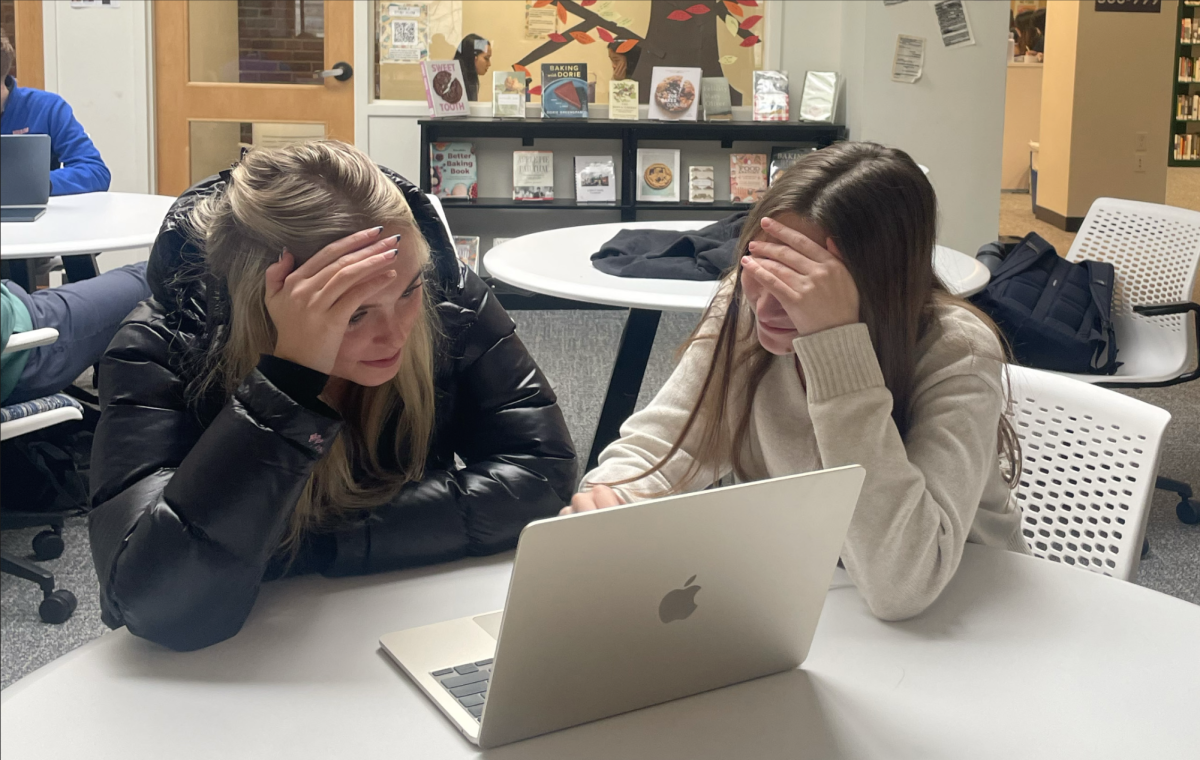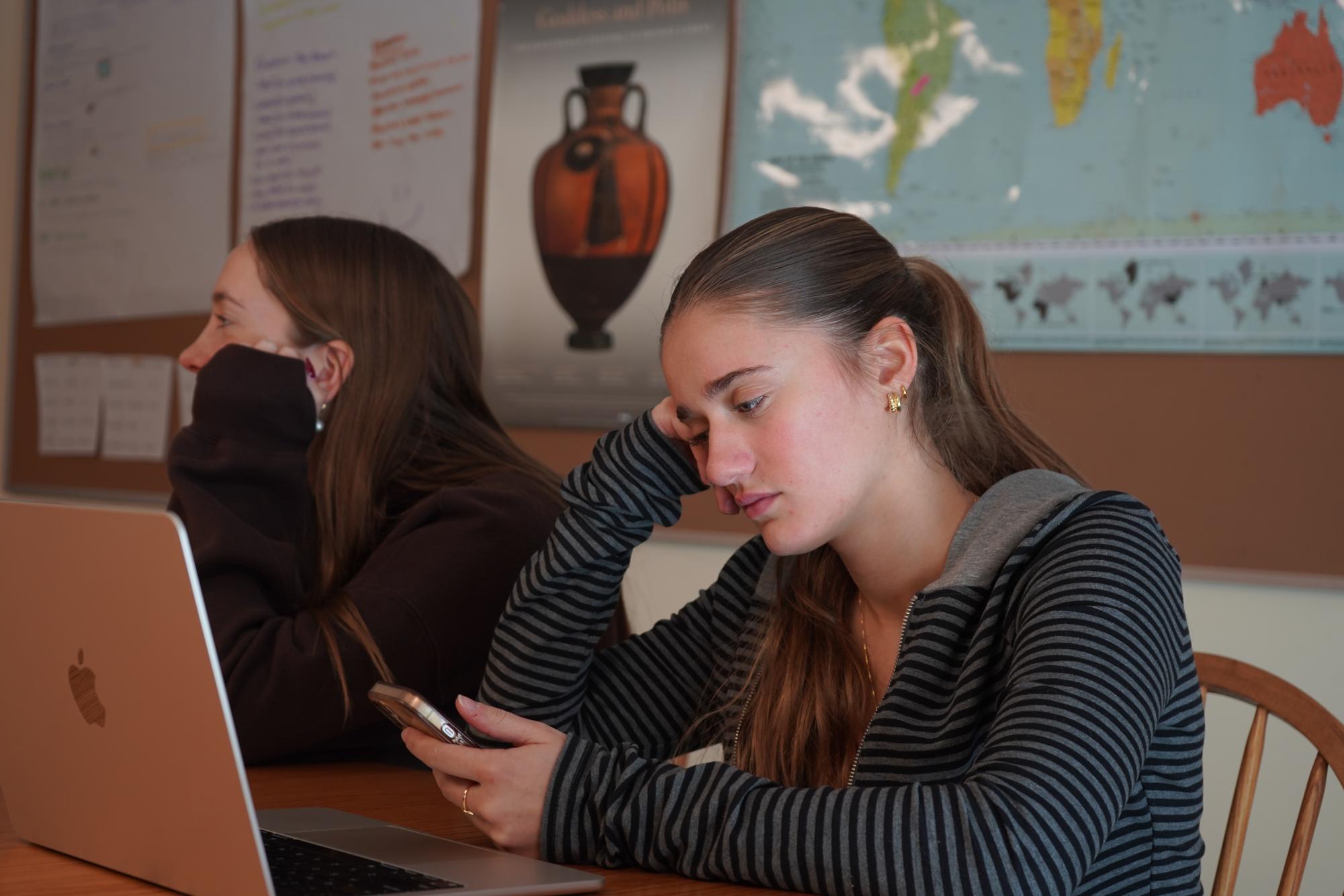
If a test goes poorly or you go to bed too late, your parents might place the blame on your mobile device. Although this may oversimplify the issue, phones play a role in distracting students, leading to poorly managed time.
According to WCNC Charlotte, human attention spans have decreased from 12 seconds in 2000 to 8.25 seconds in 2025. Pew Research attributed much of this to technological distractions, finding that 31% of teens lose focus in class because of their cell phones.
Upper School (US) Counselor Doug Neuman sees social media as a possible root of decreasing attention spans.
“It’s really preying on the little quick hits,” he said. “It’s a three-second look at something going on, moving on to the next reel, then the next reel. They’re really quick sound bites of information. Then, people begin to adapt to that style so that your attention can only last until the next thing comes along.”
Mr. Neuman said other factors can contribute to students feeling less focused.
“The cause of decreasing attention spans is a combination of trying to do more and the number of distractions that exist. So, I don’t pin everything on the cell phone, but the reality is that a lot of people find themselves in the cell phone vortex more often than not.”
Mr. Neuman suggests students plan out their time to combat distractions.
“Setting up timers and checklists and having things coded and organized are all good ways to focus better,” he said. “Often, it’s deciding to put the phone in another room for X amount of time and acknowledging that if I’m away from that, I can focus much better.”
US Science Teacher Paige Kemezis said she feels like the brain can’t effectively multitask with distractions.
“Each time you switch to a new task, there’s time that you need to reorient yourself into the new task and decompress from the old task. So, as you’re switching between ‘Hey, I’m on my text over here,’ and your homework problem, you’re still thinking about the text, and you’re still trying to process what your homework problem is. Probably, for the first couple of minutes, you’re not fully in: You’re in between. The more you’re switching, the more you’re in the between moments where no productivity happens.”
As a result of decreasing attention spans, students often spend more time on their work than expected, she said.
“What I would say should take the average student 30 minutes, and moving the average to a higher time, people are now saying, ‘I couldn’t get the homework done.’ I have to adjust to that.”
Ms. Kemezis said she has changed her lesson plans.
“Recently, I’ve had to shorten directions and bold, highlight and underline the most important things, and kids still miss it because they don’t want to read it.”
For Gabriel Matta ’27, staying engaged in class hinges on doing interpersonal work.
“Most of the time I get distracted or lose focus because what we’re doing in class isn’t really interesting to me,” he said. “I just lose attention to what we’re doing and even sometimes want to fall asleep. But, when the class is really cool, like when working with my friends on a math problem, I can keep my attention span for a very long time. When you’re talking to one another, you can’t be zoned out.”
With attention spans shortening and distractions increasing, US teachers are striving to find new ways to keep students engaged.