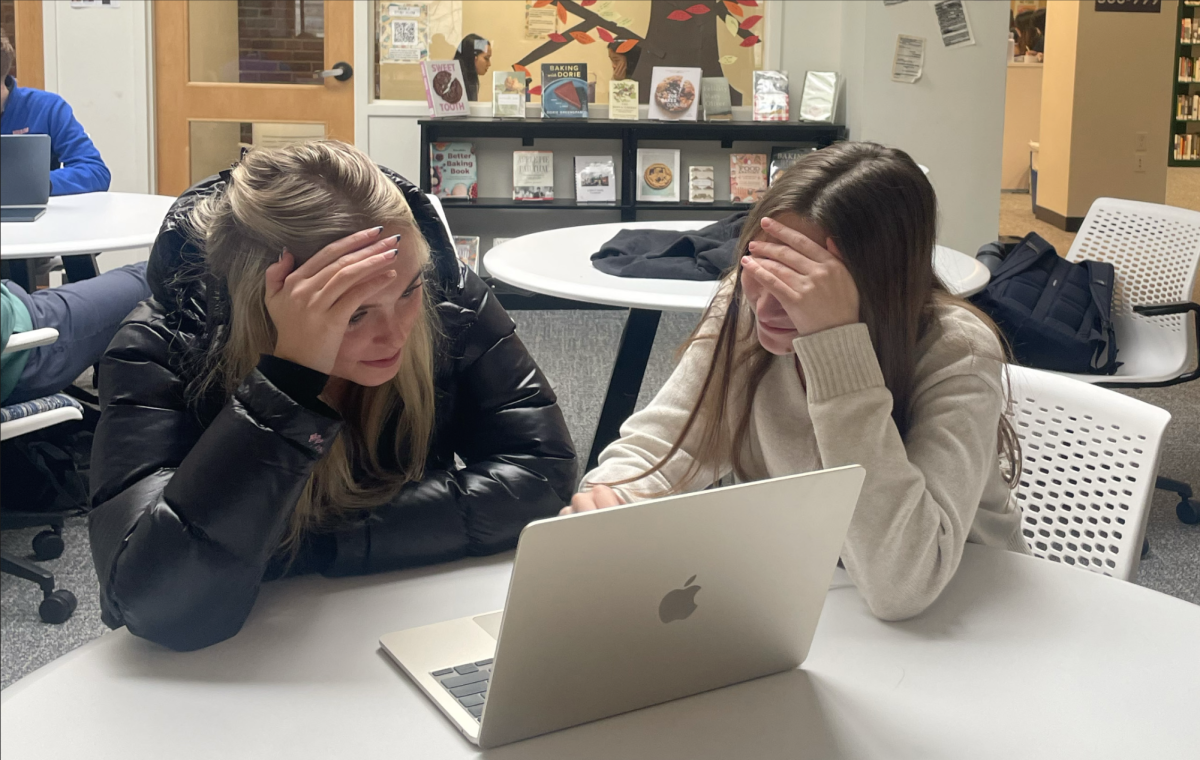
“I’m not sure if the students’ feedback mattered in his decision to be hired, but I feel like it should matter because we are the ones that see his teaching firsthand in the classroom,” Kaeleigh Neil ’27 said on observing a teaching candidate lead a sample lesson for Upper School (US) History Teacher Lina Feuerstein’s class. “The students being taught have a different perspective and see things that some adults might miss.”
Student feedback is one component of the US teacher hiring process led by administrators, department chairs, faculty members and the Diversity, Equity, Inclusion and Global Education (DEIG) Office. While administrators said student input is weighed “holistically” with a candidate’s credentials and experience, student participation is generally limited to 45-minute sample lessons and feedback through Google Forms.
Kaeleigh said a rotating group of students could provide more representative feedback.
“There should be a variation of students that sit in on different sample classes,” she said. “There could be different shared perspectives and learning styles, as having a larger sample size can help see the teacher’s effectiveness with more variation within student feedback.”
Viena Desai ’26 observed a teaching candidate last year.
“I have no perception of if my feedback mattered because I don’t know how his hiring process was deliberated,” she said. “I like the sample classes for teachers but don’t think that forms are the most efficient way for students to relay their opinions. It may be better for them to directly tell someone so they feel more heard.”
US Math Department Head Meena Kaur said a greater emphasis is often placed on a candidate’s résumé.
“Student feedback and teacher credentials are equally important,” she said. “But the first round of reviewing applications has us looking at the résumé and cover letter more thoroughly.”
After initial résumé screenings, the school meets with candidates and then invites them to teach a sample class.
“We discuss internally some of the pros that we saw and some things that the person might need to work on,” she said. “We are looking for content knowledge, ease in the classroom and comfort around students, especially high school students. They also have to be flexible and adjust.”
After the sample class, students complete a Google Form with questions such as: “Would you want this candidate as your teacher?” and “If this candidate were to teach you tomorrow or the next day, what advice would you give them to create an even stronger class?”
“Most of the time, I’ll get some feedback from the teacher that says that students really like that candidate and would hire them,” Ms. Kaur said. “Sometimes, it’s just that gut reaction that helps make an informed decision.”
Middle School Librarian and Human Resources Recruitment and Retention Manager Christina Dominique-Pierre said student input usually aligns with the school’s assessment.
“If student feedback is able to eliminate a candidate completely, we are not doing our job well,” she said. “It shouldn’t be a student that raises to the surface something that is so shocking to a search that we would no longer consider the character of a candidate.”
US Dean of Teaching and Learning Michael Chapman emphasized the importance of hearing from students.
“I wouldn’t say that one set of feedback matters more or less than another,” he said. “We have to look at each element, résumé, interview responses, sample lessons and student feedback through the lens of the goals of that position. If a candidate’s feedback is really positive or if something pops up that poses some questions, then the committee will discuss that.”
US Math Penn Fellow Virginia Heinsen said after leading a sample class, she talked with the hiring committee.
“After the lesson, I didn’t get the students’ feedback, but I was with everyone who was observing the lesson and we chatted about how things went,” she said. “The decision to hire me came pretty soon after.”