“The discipline process isn’t clear at all,” a student who requested anonymity said.
Many Upper School (US) students are uncertain about how discipline is enforced. In an informal Vanguard poll of 27 US students, 62% said they did not understand the disciplinary process, and 85% said they had not read the All-School Student and Family Handbook.
“More transparency would be helpful since the whole process is a mystery,” the student said.
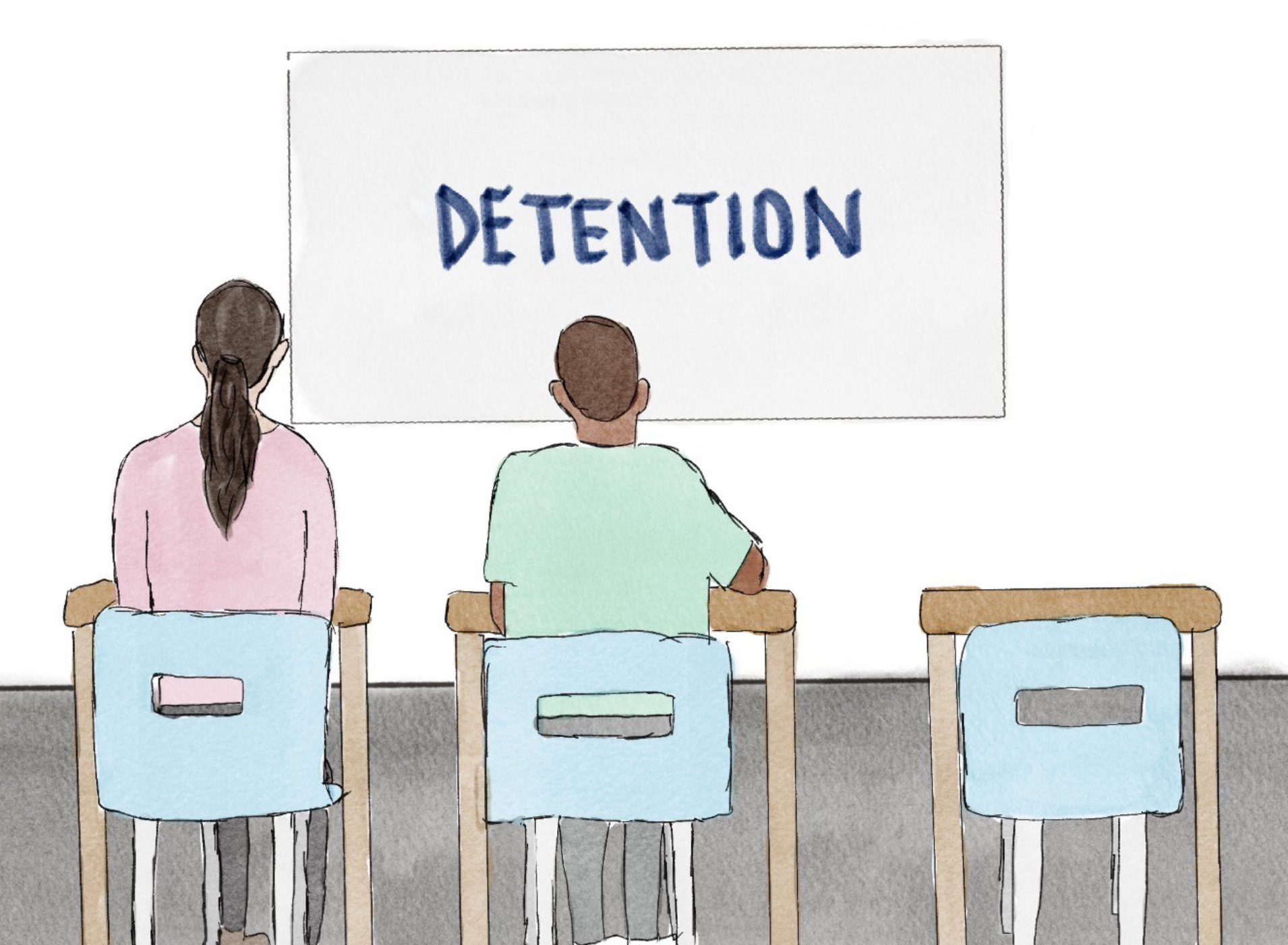
According to the Handbook, students can receive one-hour detentions after school for minor infractions, such as tardiness or leaving campus without permission. The Discipline Committee (DC) — a group of 11 US upperclassmen and two faculty members — handles more serious violations, including bullying, cheating and plagiarism (See Vol 54, Issue 1: “Suspended!”). US English Teacher and DC Chair Alda Farlow declined to comment on the DC’s process. DC members are usually told not to discuss their work on the committee.
Students can be placed on Disciplinary Warning — allowing the school to “restrict privileges and/or [their] participation in school activities” — and Disciplinary Probation if they continue violating school rules. Expulsion is more likely for students already given these warnings, according to the Handbook.
US Assistant to the Dean of Students Kerri Anne Shea explained the difference between detentions and the DC’s jurisdiction.
“Detentions and the DC don’t have anything to do with each other,” she said. “The DC usually assigns consequences like in-house suspensions, out-of-school suspensions and occasionally expulsions for serious infractions of school rules and policies.”
As outlined by the Handbook, DC “student members are appointed by the Director of the Upper School and the Head of School from nominees proposed by the Student Council. Three students and three faculty members, drawn from the larger group of committee members, plus the Chair of the Committee attend each Student/Faculty Discipline Committee hearing.”
DC member Hannah Rosado ’26 said she could not speak about actual cases but could provide information on the process. The committee listens to the students, teachers and advisors involved before reaching a decision, she said.
“The faculty encourages us to read the Handbook first, but when you go up for your first meeting, they’ll tell you what’s happening, and then you’re just thrown into it,” she said.
Hannah attended four or five meetings last year.
When students are notified of potential disciplinary violations, they’re also informed of evidence against them, according to the Handbook. Dean of Students Rory Morton ’81 can decide to handle the case or assign it to the DC. The DC “recommend[s] fair, consistent and appropriate consequences that balance the educational needs of the individual student with the needs of the entire community,” according to the Handbook.
“There isn’t a majority-based decision process: We just come to a decision,” Hannah said. “If someone disagrees, they’ll say their reasoning, and we’ll work through it.”
Students whose cases reach the DC typically receive punishments lasting from a day to a week, including losing a free block or spending lunch in detention, Hannah said.
“There is a lack of transparency because it’s only the student’s business,” Hannah said. “If the student goes in, and they’re embarrassed or ashamed about what happened, we don’t want them to feel as if everyone knows what’s happening.”
To see how the school’s discipline system compares to peer schools, The Vanguard spoke to Belmont Hill School student JJ Pena ’26.
“For general violations like having your phone out at school and minor offenses, the typical reaction is Saturday detention,” he said. “For more serious violations, such as going against the academic code of conduct or harassing other students, we do have a disciplinary committee.”
The Administrative Committee (AC) “convene[s], evaluate[s] and respond[s] to all reports of bullying, cyber-bullying and retaliation,” according to the Belmont Hill Bullying Prevention Plan.
“If a student’s case makes it to the AC, the lightest sentence is a suspension,” JJ said. “Belmont Hill tries to keep cases secretive, but everyone knows. In physical violence or hazing cases, kids are suspended while their cases are ongoing.”
Some AC cases have taken multiple weeks, JJ said.
“A lot of cases involve gathering different viewpoints. The administrators will call everyone in, interview them and get any important information that might’ve been missed in the statements of both parties.”
An elected junior and senior serve on the AC in addition to senior administrators.
“Students have a good comprehension of what happens in the disciplinary process because there are school-wide assemblies where we talk about topics like this to spread awareness,” JJ said. “People know what repercussions come with lying and cheating.”