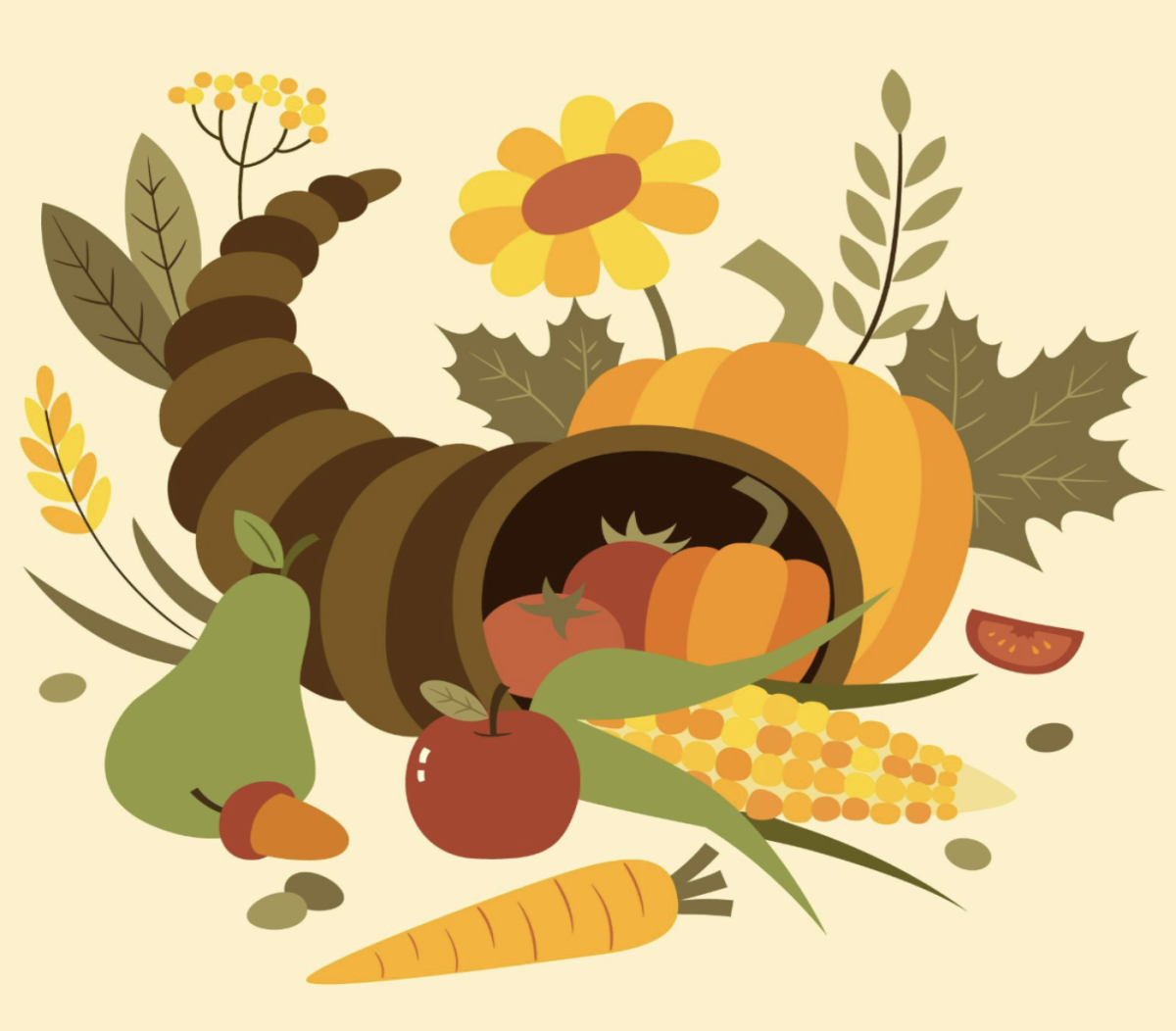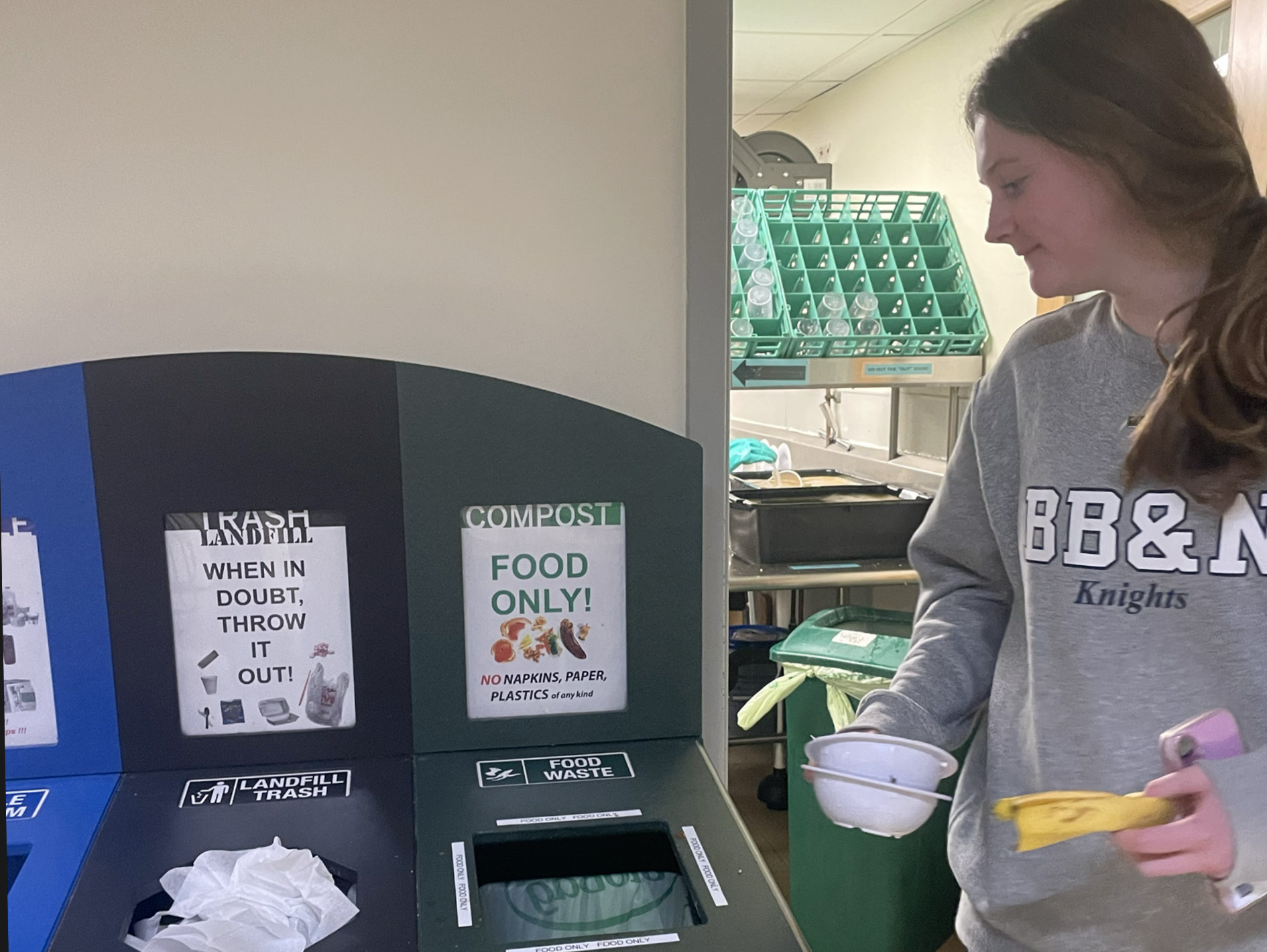
The Upper School (US) cafeteria and the Eco Reps — the US environmental club — are taking sustainability to the next level with a composting project aimed at turning fruit and vegetable scraps into usable soil for school gardens.
Eco Reps Co-President David Xiong ’26 said the group plans to launch its initiative this academic year.
“It won’t be like the industrial composting that our school does, which includes all food scraps. We’ll be focusing on vegetable and fruit scraps. The idea is to use those scraps for the garden beds to show the community how composting can directly benefit the school.”
The US currently collects excess food scraps in its cafeteria compost bins and partners with Save That Stuff, a company that turns food waste into usable compost. Last year, the Eco Reps started monitoring the compost, recycling and trash bins during lunch.
“We experimented with a short period of patrolling the compost bins, but we decided that’s not going to fix the long-term problem,” David said. “What was more important was going out there and clarifying why we’re composting, how it’s working at our school and precisely what goes in each bin.”
US English Department Head and Eco Reps Faculty Advisor Ariel Duddy has worked on the project.
“It’s a shame for us to have a composting system and to pay a company to do composting for us if we’re just going to contaminate every composting bucket,” she said. “Let’s make sure that we’re turning whatever is wasted and what we are able to compost into something usable as opposed to going to the landfill and adding to carbon emissions.”
US Director of Dining Services Jim Fuller said the initiative builds on the cafeteria’s commitment to sustainability.
“We are 100 percent compostable pre-consumer, meaning everything we prepare in our kitchen, we compost,” he said. “You want to know where you’re getting your food from, so you want to get it from a safe and reputable vendor that believes in what you believe in.”
The US buys the bulk of its food from Performance Food Group (PFG) while also making an effort to source local ingredients.
According to PFG’s 2024 sustainability report, the company has reduced its Scope 1 and 2 greenhouse gas emissions — direct and energy-related emissions — by 10.4% since 2021, aiming for a 30% reduction by 2034. PFG also verified that 94.5% of its beef, poultry, pork, seafood, coffee and teas are environmentally sustainable. An external audit of PFG by DitchCarbon gave them a sustainability score of 36, which is better than 64% of companies in their industry.
“I believe strongly in supporting local businesses,” Mr. Fuller said. “Our main produce company is based in Wakefield and sources locally when possible. You can’t get a fresh banana grown in New England, but we get local apples and greenhouse-grown lettuce.”
Some students have ideas about further minimizing food waste through self-serve options.
“There’s some days where they give me too much,” George Miller ’28 said. “There’s some days where they give me too little. When it’s too much, I end up throwing away things, and when it’s too little, I create more waste because of the dishes. If it was a buffet, then people could just serve it themselves.”
Leah Cooper ’28 agreed.
“What they do right now by having so much of it be self-serve is a good way to minimize food waste,” she said. “The only other way I could think of is if everything was self-serve, so you take what you want.”